

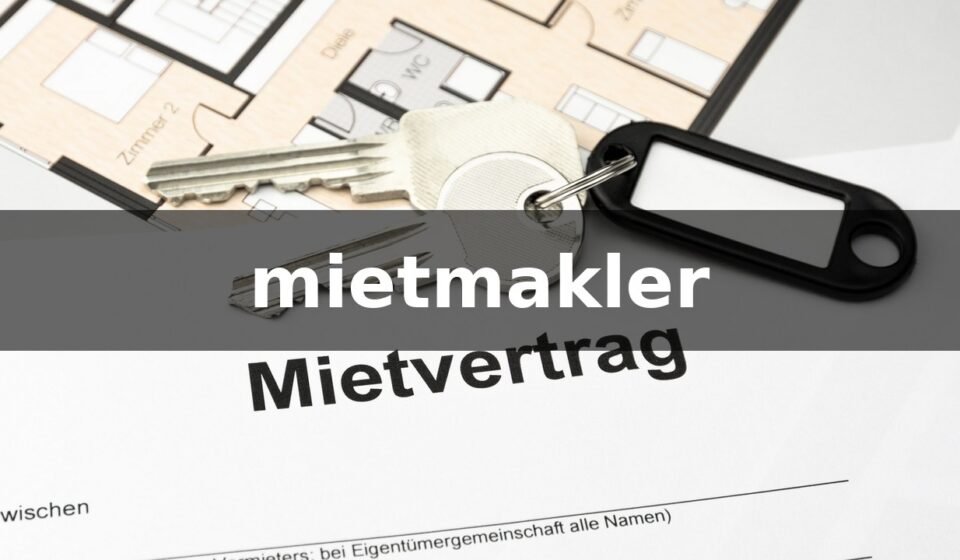
mietmakler: The German Rental Broker, What the Job Covers, Who Pays, and the Rules That Decide the Fee

Introduction
mietmakler is a German word that describes a rental broker, a professional who arranges residential lettings in Germany, and the word itself explains the job in two parts, since Miete means rent and Makler means broker or agent. A mietmakler therefore sits in the middle of a letting, working for the side that commissions the work, finding tenants for landlords or finding homes for people who are searching, and the role has become widely known outside Germany because the German rental market has strict rules about who pays such a broker and how much the fee may be. Readers who search for mietmakler deutschland usually want one of three answers, namely what the broker actually does, what the service costs, and whether hiring one is worth it, and this guide answers all three with facts that can be checked in public sources.
The first answer matters most, because mietmakler is a general occupational title, not the name of one famous company or one official website, and no single business owns the word. Many individual brokers and small firms use the term in their own names, yet the word itself belongs to the profession, in the same way that words such as estate agent or letting agent describe a job rather than a brand. A mietmakler in Germany works under German brokerage law, and since 1 June 2015 the most important rule for residential lettings has been the Bestellerprinzip, the commissioning principle, which says that whoever commissions the broker pays the broker, a rule that reshaped the whole market and still decides most fee disputes today. Readers who follow property guides will find the German system unusually clear on this point, since the law draws a sharp line for homes while leaving commercial lettings under different practice.
The sections that follow work in order, starting with the meaning of the word and the mietmakler vs immobilienmakler distinction, then the mietmakler aufgaben, then the fee rules in full, then the practical costs, then when hiring one makes sense, and finally the questions readers ask most. Where a figure depends on a contract or on a moving market, this guide says so plainly.
mietmakler: What the Word Means in Germany
The word mietmakler is built from two everyday German words, and understanding the two halves explains why the role exists at all. Miete covers rent and the act of renting, while Makler covers a broker or intermediary, someone who brings two sides of a deal together and is paid for making the match. Put together, the word describes a broker whose work is lettings rather than sales, and German usage keeps that distinction fairly clean, since a general Immobilienmakler may handle both sales and lettings, while a mietmakler, also called a Vermietungsmakler in some contexts, is understood to work on the rental side. The distinction is useful for anyone searching in German, since a firm that sells houses and a broker who lets flats may both call themselves Makler, yet only the rental side falls under the residential letting fee rules described later in this guide.
It is worth stating plainly what research did not find, since readers sometimes assume that a widely searched word must hide one big company. No single nationally famous company or official portal called simply mietmakler emerged from research, and the word functions as a job title used by many independent brokers, small agencies and larger firms alike. That absence is itself informative, because advice about a mietmakler should focus on the role, the contract and the law, rather than on the reputation of one brand. A landlord in Munich and a tenant in Berlin may both deal with a mietmakler, yet with entirely different firms and contracts, and the only common thread is the legal framework that governs the work.
German law also sets a basic entry condition for the trade, since property brokers in Germany need a trade licence under section 34c of the German Trade Regulation Act, the Gewerbeordnung, before they may work as brokers. That licence applies to the brokerage trade broadly rather than to rental work alone, and it means a legitimate broker should be able to show proper business registration. The licence does not by itself guarantee quality, and it does not replace the written brokerage contract that decides the fee, yet it gives clients a first check when choosing whom to trust. Readers who follow housing market guides will recognise this pattern from other regulated trades, where a licence opens the door but the contract decides whether the service is good.
mietmakler: What a Rental Broker Actually Does Day to Day
For a landlord, a mietmakler usually takes over the whole letting process, starting with advice on a realistic asking rent and continuing through photographs, a listing on the large property portals, and the organisation of viewings. The broker answers enquiries, sorts serious applicants from casual interest, collects the documents landlords commonly ask for, such as proof of income, identification and credit information, and presents a shortlist with a recommendation. Once a tenant is chosen, the broker commonly prepares the tenancy agreement or works from the landlord’s standard form, arranges the handover appointment, and records the condition of the flat in a handover protocol, the Übergabeprotokoll, which protects both sides if damage is disputed later. The landlord keeps long-term responsibility for maintenance and repairs, while the broker’s job ends once the letting is arranged, unless a separate management agreement is signed.
For a tenant who commissions a search, the work looks different, since the mietmakler then acts as a personal search agent rather than as the landlord’s representative. The broker agrees a search profile covering size, location, budget and timing, monitors new listings, arranges viewings that fit the tenant’s schedule, and helps prepare applications that present the tenant’s documents in complete form. In tight city markets, where a single attractive flat can draw hundreds of applications, that preparation can matter, since an incomplete file is often set aside before anyone reads a covering note. The broker may also review the draft tenancy agreement with the tenant, flagging clauses on notice periods, deposits, operating costs and renovation duties, although the broker is not a lawyer and cannot replace independent legal advice on a difficult contract.
Newcomers to Germany gain a further benefit from a mietmakler, since the rental process carries administrative steps that surprise people who arrive from abroad. After moving in, a tenant must register the new address with the local authorities, the Anmeldung, and for that step the tenant needs a written confirmation from the landlord, the Wohnungsgeberbestätigung, which the landlord must provide within two weeks of the move-in date. A broker who knows this routine can make sure the document is requested at handover rather than chased weeks later. The same practical help applies to the energy certificate for the flat, which landlords must be able to show, and to deposit rules, which in German practice commonly run up to three months of cold rent.
mietmakler: The Bestellerprinzip and Who Pays the Fee
The most important rule for anyone dealing with a mietmakler in Germany is the Bestellerprinzip, a word that translates roughly as the commissioning principle, and it has governed residential lettings since 1 June 2015. The rule was introduced through the Mietrechtsnovellierungsgesetz, the tenancy law amendment act, which amended the Wohnungsvermittlungsgesetz, the housing brokerage act, and its core sentence is simple: the party who commissions the broker pays the broker’s commission. In practice the landlord commissions the broker in the large majority of residential lettings, since the landlord wants a tenant found, so the landlord pays the fee, and a tenant in that situation owes no broker commission, even if the tenant first saw the flat on the broker’s own listing. A clause in a tenancy agreement that tries to shift a landlord-commissioned fee onto the tenant is invalid under this rule, and violations can be punished as an administrative offence with a fine of up to 25,000 euros.
The rule has one genuine exception, and it is narrow by design, since a tenant pays only when the tenant has expressly commissioned the broker to search for a home and the flat was not already offered by the landlord or commissioned through the landlord. In that tenant-commissioned case the fee is capped by law at two months of net cold rent plus value added tax, the Nettokaltmiete figure that excludes heating and service charges, and that cap is a hard ceiling rather than a guide price. A valid brokerage contract is also a precondition for any fee claim, and since the reform the contract must be in text form rather than a spoken agreement, and no commission is owed at all unless a main tenancy contract actually comes into being as a result of the broker’s work. The general brokerage rule in section 652 of the German Civil Code, the Bürgerliches Gesetzbuch, points the same way.
Two further limits protect tenants and landlords alike. No commission is owed for a mere extension, continuation or renewal of an existing tenancy, since the broker has arranged nothing new, and no commission is owed where the broker is economically intertwined with the owner or landlord, for example where the broker is effectively part of the landlord’s own organisation. The Bestellerprinzip was challenged in court after its introduction, yet the Federal Constitutional Court upheld it on 29 June 2016, holding that the rule was justified as a way to correct social and economic imbalance on the rental housing market to the disadvantage of people searching for homes. Readers should also note the boundary of the rule, since it covers residential lettings only, while commercial lettings follow different practice, and a separate cost-sharing rule for residential sales, introduced from late 2020, belongs to purchases rather than to rentals.
mietmakler: What the Service Costs in Practice
Before the Bestellerprinzip, tenants in Germany commonly paid the broker’s fee, often up to two months of net cold rent plus value added tax, and that cost fell on people who were already paying a deposit and moving expenses. After the reform the picture reversed in practice, since landlords who commission the work now carry the fee, and reports from the first year after the reform recorded that the average commission settled at roughly one month’s rent, with overall broker turnover falling by about a fifth. For a landlord who commissions a mietmakler today there is no statutory cap, so the mietmakler provision is freely negotiable and follows local market practice, which means a landlord should compare offers and agree the fee and the scope of work in writing before viewings begin. Some brokers also offer flat-rate packages or hourly billing for defined tasks, a model that suits landlords who want only part of the service.
For a tenant who decides to mietmakler beauftragen, the cost ceiling is fixed and should be confirmed before the search starts, since the lawful maximum is two months of net cold rent plus value added tax, and any demand above that ceiling for a tenant-commissioned residential search is unlawful. A tenant should also ask, before signing anything, whether the flat was already offered by the landlord, since that single fact can decide whether any tenant fee is owed at all, and a tenant asked to pay a fee for a landlord-commissioned letting should refuse and seek advice, for example from a local tenants association, the Mieterverein. The practical lesson for both sides is the same, namely that the brokerage contract, not a verbal promise or a portal listing, decides the fee, and a contract that names the commissioning party, the fee and the scope of work in text form prevents most arguments before they start.
mietmakler: When Hiring One Makes Sense and When It Does Not
A mietmakler makes most sense where time, distance or competition makes a search hard, and the clearest cases are the tight markets of large cities such as Berlin, Munich and Hamburg, where attractive flats draw large numbers of applicants and good listings disappear quickly. A professional who relocates for work, a family arriving from abroad, or a landlord who owns several flats and cannot attend viewings all gain real value from a broker who filters applicants and prepares complete files. A landlord with a single flat in a quieter town, or a tenant with local knowledge and flexible timing, may reasonably manage without one, since direct listings on the large portals can produce a good match at no fee. The honest test is not whether brokers are good or bad in general, but whether the fee buys something the client cannot easily do alone, such as speed, screening or local knowledge.
Red flags deserve equal attention, since a small number of bad practices still appear despite the clear rules. A demand for a fee from a tenant for a flat the landlord commissioned, a request for cash without a written contract, pressure to sign a search mandate before any flat has been shown, or a refusal to name the commissioning party are all reasons to walk away and take advice. A careful client should also check that the broker holds the required trade licence, that the brokerage contract states the fee and the scope in text form, and that any deposit, handover protocol and tenancy agreement are handled as separate documents with their own rules. The mietmakler kosten question, in other words, is never only about the amount, since a lawful fee for a well-defined service is a fair price, while any fee for a service the client never commissioned is a dispute waiting to happen.
mietmakler Facts at a Glance
| Point | Detail |
|---|---|
| Word meaning | Miete (rent) plus Makler (broker): a broker for residential lettings |
| Also called | Vermietungsmakler; distinct from a general Immobilienmakler who may also handle sales |
| Who the broker serves | Whoever commissions the work: landlord in most lettings, tenant under a search mandate |
| Core rule | Bestellerprinzip since 1 June 2015: whoever commissions the broker pays the fee |
| Tenant fee cap | Maximum two months of net cold rent plus value added tax, only for a genuine tenant-commissioned search |
| Landlord fee | No statutory cap; freely negotiable and agreed in the brokerage contract |
| Contract form | Text form required; no fee without a valid contract and a concluded tenancy |
| Fine for violations | Up to 25,000 euros for breaches of the housing brokerage act |
| Court ruling | Federal Constitutional Court upheld the Bestellerprinzip on 29 June 2016 |
| Scope limit | Residential lettings only; commercial lettings follow different practice |
| Trade licence | Property brokers need a licence under section 34c of the Trade Regulation Act |
| Single famous brand | None found: mietmakler is a general job title, not one company |
The table above gathers the verified core of mietmakler into one place, and its most useful row may be the last one, since it stops a reader from chasing a single brand that does not exist. The word describes a role governed by a clear fee rule, and the practical questions for any reader are who commissioned the broker, what the written contract says, and whether the fee sits inside the lawful limits. A reader who keeps those three questions in mind will deal with any broker, in any German city, on solid ground.
mietmakler: Questions Readers Ask Most
Do tenants ever have to pay a mietmakler at all, and the answer is yes, but only in the narrow case where the tenant expressly commissioned the search and the flat was not already offered by the landlord, with the fee capped at two months of net cold rent plus value added tax. In the common case, where the landlord commissioned the broker to find a tenant, the tenant pays nothing, and a clause that tries to move that fee onto the tenant is invalid, so a tenant asked to pay in that situation should ask who commissioned the broker and seek advice before paying anything. Is a broker legally responsible for the condition of the flat or for repairs, and the answer is no, since that responsibility stays with the landlord, while the broker’s role is to arrange the letting and record the handover condition. Can a mietmakler negotiate the rent or the contract terms, and the answer is yes in practice, since brokers commonly advise on a realistic asking rent and discuss clauses with both sides, although the final agreement belongs to landlord and tenant and a broker cannot replace a lawyer on a difficult legal point.
What happens if no tenancy is signed, and the answer is that no commission is owed, since a fee claim requires a concluded main contract that results from the broker’s work, which is why a broker who shows flats without a signed mandate and without a result cannot later demand payment for effort alone. Does a mietmakler also manage the flat after the letting, and the answer is only under a separate agreement, since letting and management are different services, and a landlord who wants rent collection and maintenance coordination needs a management contract in addition to the brokerage contract. Is the word mietmakler used outside Germany, and the answer is mainly no in any official sense, since the word and the fee rules belong to the German rental system, although German-speaking landlords and tenants in Austria and Switzerland may use similar words under their own different laws, so readers should never assume that German fee rules apply across a border.
Conclusion
mietmakler names a practical German profession rather than a single company, and its value lies in the search, screening and contract routine it handles, with the fee decided by the clear rule that whoever commissions the broker pays, capped for tenants and negotiable for landlords. Readers who check the commissioning party, the written contract and the lawful limits before signing will get the benefit of the service without the fee disputes that the 2015 reform was designed to end.