


Introduction
incredorable is a word that stops readers in their tracks, not because it is difficult to pronounce but because it looks familiar and strange at the same time. At first glance it seems to be a typing error for incredible, yet a second look shows two well-known English words hiding inside a single spelling, and that double vision is exactly why people keep searching for it. Readers meet it in usernames, headlines, branding discussions and a shopping site name, and each sighting raises the same question: is incredorable a real word, a joke, a brand or simply a mistake that escaped into the wild?
The honest answer, given plainly at the start, is less tidy than a dictionary entry, because no entry for incredorable was found in the major dictionaries checked, while its two parent words are both well documented. The best-supported reading is that incredorable is a playful blend of incredible and adorable, a reading stated in exactly those terms by a lifestyle listing, and a site directory also lists a shopping site under the name with the tagline Incredibly Adorable. Nothing more is proven about a company behind the name, and this guide will not invent a founder, a founding date, a product list or a headquarters for it, since none of those details appeared in the sources checked.
What follows separates what can be verified from what can only be read as a plausible interpretation. Readers who want an incredorable meaning or an incredorable definition will find the two parent words explained from dictionary sources, the blend pattern explained with familiar examples, the shopping site listing reported with its limits stated, and a clear account of what the word is not. Readers who follow word meanings will recognise this kind of word at once, since English gains new coinages every year and only a few ever earn a dictionary place, and the interesting question is usually whether a new word communicates clearly when people use it.
incredorable: A Word That Looks Familiar and Strange at Once
The first reason incredorable catches the eye is its spelling, since the opening letters i-n-c-r-e-d echo incredible so strongly that the brain completes the familiar word before the eyes reach the end of the spelling, and then the ending o-r-a-b-l-e pulls the mind toward adorable instead. That double pull is the signature of a blend, a word built by joining a splinter of one word to a splinter or a tail of another, and the result feels both new and already known, which is why readers pause over it rather than skipping past it. A word that belonged to only one parent would not produce that pause, so the pause itself is evidence about how the word was formed, even though it is not proof of any dictionary status.
The second reason readers hesitate is that incredorable can easily be mistaken for a typing error, and many coined words begin their lives looking exactly like mistakes. The difference in telling a typo from a coinage is repeated deliberate use, since a typo appears once and is corrected while a coinage keeps turning up in fresh places with the same spelling and a consistent sense. In the case of incredorable, the repeated sightings include a lifestyle listing that names it as a blend and a site directory that lists a shopping site under the name, both using the same spelling with the same playful sense behind it. That pattern points toward deliberate coinage in at least some uses, even though it says nothing about whether any dictionary will ever adopt the word.
incredorable: The Two Words Inside It
The first parent word is incredible, and its history is long and well documented in dictionary sources. Merriam-Webster traces incredible to the Latin word incredibilis, formed from in- and credible, and records the word in English use since the fifteenth century. In modern use it carries two senses, since it can mean something too extraordinary to be believed, and it can also mean something extremely good or impressive. The shift from doubt to praise happened because speakers used the word for things so good that they seemed hard to believe, until the praise sense stood on its own.
The second parent word is adorable, and its history is shorter but just as well documented. Merriam-Webster records the first known use of adorable in English in 1601, and traces it through French back to Latin adorabilis, from adorare, meaning to venerate or adore, plus -bilis, meaning capable of being acted upon. In its earliest English sense adorable meant worthy of veneration, a solemn sense that belonged to worship rather than to charm, and only later did the sense weaken into the modern meaning of extremely charming or appealing. Etymology sources record the weakened sense of delightful and charming from 1710, and today the word is used most often for children, animals, small cottages and pretty dresses.
The incredorable word origin is therefore two histories meeting in one spelling: incredible supplies scale and astonishment, adorable supplies warmth and charm, and this incredible and adorable blend therefore reads as something so charming that it amazes, or so amazing that it charms. That reading is an interpretation built from the verified meanings of the two parents, not a definition quoted from any dictionary, and this guide marks it as such. The distinction matters, because a reader who treats a plausible reading as a settled definition will overclaim in formal writing, while a reader who knows it is a reading can use the word with confidence where context makes the sense clear.
incredorable: How Blends Like This Are Built
Blends, also called portmanteau words, are made by joining part of one word to part of another, and English is full of them once a reader starts looking. The classic examples are brunch, from breakfast and lunch, and smog, from smoke and fog, and in both cases the new word keeps a splinter of each parent so that both parents stay faintly audible inside the result. A more recent example is adorkable, formed from adorable and dork, which shares a parent with incredorable and shows the same pattern of keeping the adorable tail while swapping the opening. Linguists describe these formations as blends rather than compounds, since a compound joins two whole words while a blend trims at least one parent down to a splinter before joining.
The word incredorable fits that pattern neatly, since it reads as incred, a splinter of incredible, joined to orable, the tail of adorable, with the shared sounds smoothing the join so that the result feels like one word rather than two words pushed together. The overlap is part of the charm, because the ear hears incredible at the start and adorable at the end, and that double hearing is what makes the coinage feel witty rather than random. A coinage that kept too little of either parent would be unreadable, and a coinage that kept both parents whole would simply be a phrase, so the balance struck by incredorable, keeping enough of each parent to be recognised, is the reason the word works as a piece of wordplay even before anyone asks what it means.
People coin blends for three plain reasons, and all three help explain why a word such as incredorable appears at all. The first reason is compression, since a blend can carry two feelings in the space of one word, which suits headlines, usernames and product names. The second reason is playfulness, since joining two familiar words into an unfamiliar one is a small joke that rewards the reader who spots both parents. The third reason is brandability, since a coined word is easier to own as a name than a common word, because a search for a coined spelling returns the coinage itself rather than millions of unrelated pages.
incredorable: What the Word Seems to Mean in Use
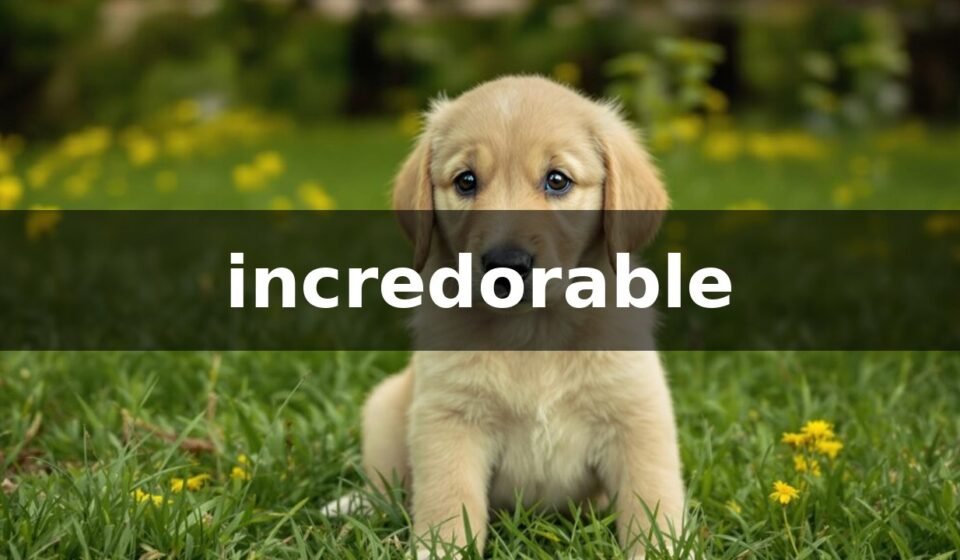
When the word is used in the wild, the sense that emerges from the lifestyle listing and from the blend itself is consistent, since both point toward something at once amazing and charming, a thing that surprises by being delightful rather than by being grand. A puppy that learns a trick on the first try, a tiny cottage with flowers at every window, a street performance that stops a crowd, a handmade gift that is both clever and sweet, all of these fit the blend reading, because each one is impressive enough to remark upon and charming enough to inspire affection. The word therefore belongs to the same family of praise as wonderful and lovely, but with a sharper edge of surprise, since the incredible half insists that the charm exceeded what was expected.
These incredorable examples show the sense more clearly than any abstract gloss, and the following illustrations are offered as usage examples rather than as quotations from any source. A reader might write that the harbour at dawn was incredorable, with fishing boats lined up under a pink sky, and the sentence would be understood as praise for a scene that was both beautiful and unexpectedly moving. A shopkeeper might describe a hand-painted mug as incredorable, meaning that it was both cleverly made and sweet to look at. In each case the context does the work of fixing the sense, which is why the word succeeds in casual writing where the reader shares the scene and fails where the reader has no scene to lean on.
The limit on that success is worth stating plainly, because a word with no dictionary entry has no fixed boundary on its meaning, and different readers may stretch it in different directions. One reader may use incredorable for anything impressive, losing the adorable half, while another may use it for anything cute, losing the incredible half, and over time those two drifts could pull the word apart. The practical advice that follows is simple: use the word where the surrounding sentences make both halves clear, and choose a standard word such as incredible or adorable on its own where only one half is meant. That discipline keeps the coinage vivid instead of vague, and it protects the writer from being misunderstood by a reader who has never met the word before.
incredorable: The Shopping Site That Carries the Name
Beyond its life as a word, incredorable also appears as the name of a shopping site, and the evidence for that comes from a site directory rather than from the shop itself. A directory entry for incredorable com lists incredorable.com under the categories Online Shopping and Business, gives its tagline as Incredibly Adorable, and records a traffic rank of 3,829,864 from the Semrush ranking system at the time the listing was captured, while also noting that no reviews had been posted for the site. That listing is useful because it confirms that at least one real site chose the coined spelling as a brand name and paired it with a tagline that spells out the blend reading in plain words.
What the listing does not prove is equally important, since a directory entry says nothing reliable about the shop behind the name, and this guide therefore claims nothing about its owners, its founding date, its product range, its size or its trustworthiness. Directory ranks move constantly as traffic rises and falls, and a rank in the millions signals a small site rather than a large one, but even that reading is only a rough guide, since ranks are estimates built from sampled data rather than exact counts. Any article that invents a company history for it from a bare directory listing would be guessing rather than reporting.
The sensible advice for any reader who meets the shop name is the same advice that applies to any unfamiliar online shop, which is to look for clear contact details, a returns policy and independent reviews before placing an order, and to treat a charming name as marketing rather than as evidence of quality. That advice is general caution, not a judgement on this particular shop, about which the sources checked say too little to support any judgement at all. Readers who follow language guides will find the same discipline useful in word research, since a thin source should prompt a thinner claim, not a bolder one.
incredorable: What It Is Not
The first thing incredorable is not is a standard dictionary word, and that negative finding rests on direct checking rather than on assumption. Searches of major dictionary sites during research returned entries for incredible and for adorable, but no entry for incredorable itself, and the absence held across the dictionaries checked, which is why this guide treats the word as a coinage rather than as an established term. That status can change, since dictionaries add words once usage becomes widespread and sustained, but no evidence was found that such adoption has happened yet.
The second thing incredorable is not is the French word incroyable, even though the two spellings share an opening and a rhythm that invites confusion. Incroyable is the ordinary French word for incredible, defined in French dictionaries as something extraordinary or difficult to believe, while incredorable is an English-language coinage built from two English words. The shared letters are a coincidence of parentage, since both words draw on the Latin root behind credible, but a reader who treats them as the same word will misunderstand both, and the distinction is worth keeping sharp in any discussion of spelling.
The third thing incredorable is not is a proven company with a documented story, and this negative finding matters because many low-authority pages about coined words fill gaps with confident-sounding company detail. No verified founder, founding year, headquarters, product catalogue or customer base appeared in the sources checked for this article, and the only company-related evidence is the bare directory listing described above, which names a category and a tagline and nothing more. Any page that names a founder or a launch year for incredorable without naming a source should be read as speculation.
incredorable Facts at a Glance
| Point | Detail |
|---|---|
| Word | incredorable |
| Type | Coined blend, not a standard dictionary entry |
| Parent words | incredible and adorable |
| Blend pattern | incred, a splinter of incredible, joined to orable, the tail of adorable |
| Parent word one | incredible, from Latin incredibilis, in- plus credible, in English use since the fifteenth century |
| Parent word two | adorable, from Latin adorabilis through French, first known English use 1601, modern sense extremely charming or appealing |
| Plausible reading | Amazing and charming at once, so charming that it amazes, offered as a reading rather than a dictionary definition |
| Site listing | incredorable.com, listed under Online Shopping and Business, tagline Incredibly Adorable, directory rank 3,829,864 at listing time, no reviews posted |
| Dictionary status | No entry found in the major dictionaries checked during research |
| Not to confuse with | French incroyable, the ordinary French word for incredible, a different word in a different language |
| Pronunciation guide | A natural reading is in-kred-uh-RAH-buhl, with stress falling by analogy with adorable, offered as a guide rather than a dictionary pronunciation |
The table above gathers the verified core of incredorable into one place, and its most useful feature may be the honesty of its gaps, since the rows that would normally carry a company history or a dictionary definition instead record that those things were not found. The blend reading, the parent histories and the site listing are all solid ground, while the company story and the dictionary entry remain open questions that only wider usage and stronger sources could settle.
incredorable: How to Use It Without Overclaiming
In casual writing the word works best where the reader can see both halves at once, and the safest places for it are social posts, captions, product names and friendly messages, where a vivid coinage is welcome and the surrounding scene fixes the sense. A caption under a photo of a tiny bookshop, a product name for a handmade toy, a headline for a story about a surprising act of kindness, all of these give the word the context it needs, since the reader meets the charming thing and the surprising thing together. In those settings the novelty of the word is a virtue, because it signals that the writer noticed something worth a fresh word.
In formal or edited writing the advice reverses, since a word with no dictionary entry will puzzle some readers and annoy others, and the standard words incredible and adorable already cover the two halves separately with full authority. A writer who still wants the blend in a formal piece should gloss it on first use, for example by writing that something was incredorable, amazing and charming at once, so that no reader is left guessing. Editors and teachers will generally prefer the standard words, since clarity outranks novelty wherever the reader cannot ask the writer what was meant.
The incredorable pronunciation follows the same honest pattern as meaning, since no dictionary gives a pronunciation for a word it does not list, and the guide offered here is built by analogy rather than by authority. The natural reading is in-kred-uh-RAH-buhl, with the stress falling on the syllable shared with adorable, and that reading keeps both parents audible, since the opening keeps the snap of incredible and the ending keeps the warmth of adorable. Readers who say it differently will still be understood, because the spelling itself points toward the same two parents.
Conclusion
incredorable is best understood as a playful modern blend of incredible and adorable that is charming precisely because it is not yet fixed by any dictionary, with a shopping site also carrying the name under the tagline Incredibly Adorable. Readers who keep that honest limit in mind can enjoy the word for what it is, an inventive coinage for something amazing and charming at once, without pretending it carries an authority it has not yet earned.