

best tapas gambas al ajillo near me: What the Dish Is, How to Judge a Good Plate, and How to Find One Close to You

Introduction
Anyone who types best tapas gambas al ajillo near me into a search box usually wants one simple thing, which is a plate of hot garlic prawns close to home, served sizzling, with bread for the oil, and cooked the way it is cooked in Spain. The search itself promises a short answer, a name and an address, yet the honest answer is longer than that, because the phrase “near me” depends entirely on where the reader is standing, and no writer can name a single venue as the finest choice for every reader in every town. This article therefore does a different job, and in many ways a more useful one: it explains what gambas al ajillo truly is, what a careful kitchen does with it, how a reader can judge a plate the moment it arrives, and how to search a local area with clear eyes rather than trusting a list that was written without any knowledge of that area.
Gambas al ajillo is one of the most famous tapas of Spain, and its fame rests on simplicity rather than on showmanship. The name translates plainly as prawns with garlic, and the dish is built from a short list of ingredients that any Spanish kitchen keeps close at hand: prawns, garlic, olive oil, dried chilli, parsley, and bread for dipping. When the prawns are fresh, the garlic is golden rather than burnt, and the oil is fragrant and clean, the result is memorable with very little effort. When any one of those parts is careless, the fault shows at once, and no garnish can cover it.
Readers should also know from the start what this guide will not do. It will not name a restaurant, quote a price, repeat a star rating, or claim that one venue in an unnamed town serves the finest version, because every one of those claims would be invented without a real visit and a real address. A reader who understands the dish will find a good version far more reliably than a reader who follows a ranking written by someone who never tasted the food.
best tapas gambas al ajillo near me: What the Dish Actually Is
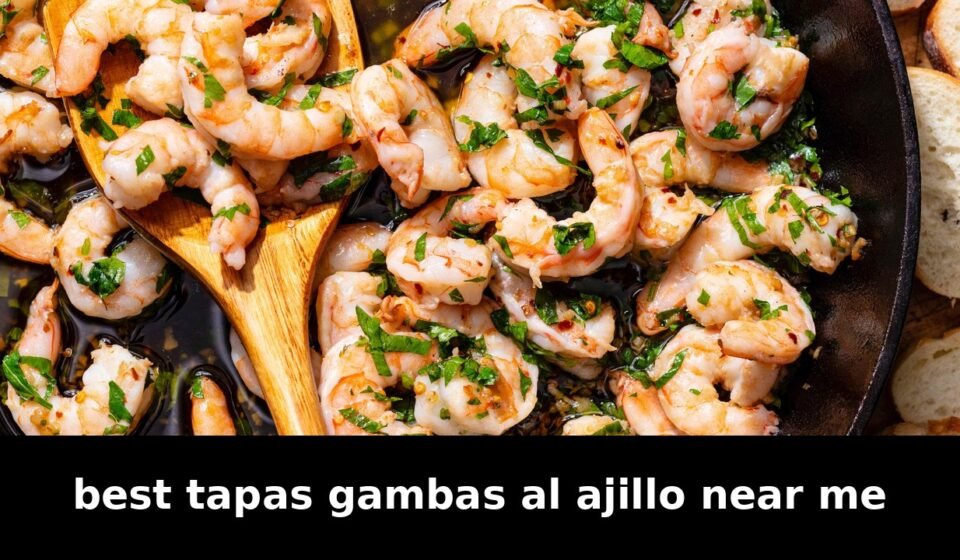
Gambas al ajillo is a classic Spanish tapa of prawns cooked quickly in olive oil that has been infused with garlic and a little chilli, then served at once, often still bubbling, in the same small earthenware dish in which it was cooked. In Spain the word gambas means prawns, while in the United States the same dish is usually listed on menus as garlic shrimp, and the two words describe the same preparation rather than two different dishes. The prawns are the centre of the plate, but the oil matters almost as much, because diners mop it up with bread, and a kitchen that treats the oil as an afterthought has misunderstood the dish. A proper serving arrives hot, fragrant, and generous with oil, with sliced garlic visible in the dish and chopped parsley scattered over the top.
The dish is strongly linked with the tapas bars of Madrid and with the coastal cooking of Andalusia in southern Spain, where prawns and olive oil have long been part of daily food, and several accounts of its history point to one or the other of those places as its home. Rather than settling that debate, which matters less than the cooking itself, it helps to understand why the dish travelled so well: it uses ingredients that were cheap, local, and always available, it cooks in minutes, and it suits the tapas style of eating, in which small plates are shared and ordered one after another.
One more point of honesty belongs here, because menus outside Spain sometimes stretch the name. The traditional version is built on olive oil, not butter, and its sauce is thin, glossy, and flavoured by garlic and chilli rather than thickened or sweetened. The Spanish tapas guides that describe this dish most carefully all return to the same short list of ingredients, and that agreement across many writers is itself a useful sign of what the classic version is.
best tapas gambas al ajillo near me: The Ingredients That Define It
Every ingredient in gambas al ajillo earns its place, and each one can lift or spoil the plate. Prawns come first, and size matters more than many readers expect: large prawns stay juicy during a short, hot cook, while very small prawns can turn tough in seconds and disappear into the oil. Freshness matters most of all, and a good kitchen will be open about whether its prawns were caught locally, bought fresh that morning, or frozen at sea, since well-handled frozen prawns can cook beautifully, while stale fresh prawns cannot be rescued by any amount of garlic.
Garlic is the second pillar, and the dish uses far more of it than most Western cooking, often six to eight cloves for a single shared plate, sliced thinly rather than crushed into a paste. Thin slices matter because they infuse the oil gently and turn pale gold without burning, while crushed garlic or garlic powder gives a harsher, flatter flavour that sits oddly in such a simple dish. Olive oil is the third pillar, and it should be a good extra virgin olive oil, used generously, because the oil is both the cooking medium and a part of the eating, mopped up with bread at the end.
Chilli gives the dish its warmth, usually from one or two dried guindilla peppers, which are slender Spanish dried chillies, or from a pinch of dried chilli flakes where guindillas are hard to find. The heat should warm the back of the throat without taking over the plate, and a kitchen that makes the dish fiercely hot has lost the balance that defines it. Parsley, chopped fresh and added at the end, brings colour and a clean herbal note, while salt ties the flavours together. Some kitchens add a pinch of sweet or smoked paprika, and some add a splash of dry sherry or white wine to lift the oil, and both additions are accepted variations rather than errors, provided they stay in the background.
| Detail | What a classic version shows |
|---|---|
| Name meaning | Prawns with garlic, from the Spanish gambas for prawns and ajillo for garlic |
| Core ingredients | Prawns, garlic, extra virgin olive oil, dried chilli, parsley, salt |
| Common additions | A pinch of paprika, a splash of dry sherry or white wine, lemon to serve |
| Cooking vessel | A small terracotta cazuela or a heavy pan, served hot in the same dish |
| Serving style | Shared small plate, sizzling, with crusty bread for the garlic oil |
| Heat level | Gentle warmth from chilli, not fierce heat that hides the garlic |
| Time in the pan | Only a few minutes, until the prawns turn pink and curl loosely |
best tapas gambas al ajillo near me: How a Good Version Is Cooked
The cooking of gambas al ajillo is short, and its shortness is the reason it demands attention. A careful cook warms the olive oil over gentle heat, adds the sliced garlic and the dried chilli, and lets the garlic turn fragrant and pale gold over two to four minutes, watching it closely, because garlic moves from golden to burnt in a matter of seconds, and burnt garlic turns bitter across the whole dish. Once the oil is fragrant, the heat is raised, the prawns go in in a single layer, and they cook for only one to two minutes on each side, until they turn pink and curl into a loose curve.
Two faults ruin more plates of gambas al ajillo than any others, and both come from impatience or inattention. The first is burnt garlic, which makes the oil bitter and dark, and which no amount of parsley can hide, since the bitterness coats every prawn. The second is overcooked prawns, which turn from tender and juicy to rubbery and tight, curled into hard little rings that resist the teeth. A third fault is serving the dish cold or lukewarm, which flattens the aroma and lets the oil congeal, and a kitchen that truly respects the dish will send it out still sizzling, even if that means the waiter must hurry.
The vessel matters too, and it is worth noticing when a plate arrives. The traditional terracotta cazuela holds heat well, keeps the oil bubbling at the table for a short while, and looks the part, while a heavy cast iron pan does the same job in kitchens that lack clay dishes. Bread should arrive with the dish, not as an afterthought ten minutes later, because the oil is at its finest while it is hot, and the bread is the tool for enjoying it. A reader who receives hot prawns, golden garlic, glossy oil, and fresh bread at the same moment is almost certainly in good hands.
best tapas gambas al ajillo near me: How to Judge a Plate When It Arrives
Judging a plate of gambas al ajillo takes less than a minute, and the senses give the verdict in order: sight, smell, and then taste. On sight, the prawns should look pink and plump, curled loosely rather than wound tight, sitting in oil that looks glossy and golden rather than dark, cloudy, or thin and watery. Sliced garlic should be visible and pale gold, not brown or black, and the parsley should look fresh and green, not wilted or dried.
On smell, garlic should lead, warm and savoury, followed by the sea sweetness of the prawns and a faint warmth of chilli, and the whole aroma should invite the diner forward rather than sting the nose. A sharp smell of burnt garlic, a stale fishy smell from old prawns, or an overpowering smell of raw chilli each points to a fault in the kitchen, and a reader should trust that first impression, since the taste will rarely contradict it. On taste, the prawns should be tender and juicy, the oil should taste of garlic first and chilli second, and the finish should be clean, leaving the diner wanting bread and another prawn rather than a glass of water to wash away bitterness or grease.
It also helps to judge the dish as part of a tapas meal rather than in isolation, because tapas eating is about balance across the table. A plate of gambas al ajillo that arrives alongside a thoughtful spread shows a kitchen thinking about the whole meal, while a plate that arrives as a lone item on an otherwise careless menu may still taste fine, but the context gives useful information. The seafood dishes that earn loyal local followings tend to share one trait, which is consistency, and that trait is worth more than any single spectacular plate.
best tapas gambas al ajillo near me: Questions Worth Asking Before You Order
A few polite questions before ordering can save a disappointing plate, and good kitchens welcome them, since the questions show a diner who cares about the food. Ask whether the prawns are fresh or frozen, and do not treat frozen as a failure, because prawns frozen quickly at sea often arrive in finer condition than fresh prawns that have travelled for days, while the real question is how the kitchen handles them. Ask whether the prawns come peeled or shell-on, so that diners who dislike peeling at the table can choose accordingly, and ask whether bread is included, since a plate without bread is missing half of its pleasure.
Two more questions matter for many readers, and they deserve direct answers. Readers with a shellfish allergy should always tell the kitchen plainly and ask whether the dish shares pans, oil, or utensils with other seafood, because an allergy is not a preference and a careful kitchen will answer without hesitation. Readers who avoid gluten should ask about the bread and about any flour used elsewhere on the menu, while remembering that the prawns and oil themselves contain no gluten, so the dish can often be enjoyed with a suitable alternative. None of these questions requires a long conversation, and the manner of the answer often tells the reader as much as the words do.
It is also worth asking what else the kitchen recommends alongside the dish, because that question reveals whether the staff eat and enjoy their own menu. A server who suggests a sensible pairing, explains a portion size honestly, or warns that a plate is large enough for three rather than two is giving the reader useful guidance, while a server who pushes the most expensive items without describing them is selling rather than serving.
best tapas gambas al ajillo near me: What to Order With It
Bread is not optional with gambas al ajillo, and it deserves to be treated as part of the dish rather than as a side note. Crusty white bread, torn or sliced, is the classic partner, because it soaks up the garlic oil without falling apart, and a kitchen that serves soft, untoasted, or stale bread with this dish has missed something basic. Ordering extra bread is a common and sensible move, and no good tapas bar will be surprised by the request, since the oil is widely considered the finest part of the plate.
For the rest of the table, the classic companions are other small plates that contrast with the rich garlic oil rather than repeating it. Tortilla española, the Spanish potato omelette served at room temperature, gives a gentle, eggy contrast, while patatas bravas bring crisp potatoes and a brava sauce that plays against the garlic. Pimientos de padrón, small blistered green peppers with salt, add a light, smoky note, and a plate of olives or a slice of manchego cheese gives the table something to nibble while the prawns are still sizzling.
For drinks, the traditional partners are dry and light, chosen to refresh rather than to compete with the garlic. A dry Spanish sherry is the classic choice, and a crisp white wine from a coastal region, such as an Albariño, suits the dish well, since both have the acidity to handle olive oil and garlic. Many readers will prefer water, a sparkling drink, or a light beer, and all of those are reasonable, since the dish itself is the star and the drink should not steal its flavour.
best tapas gambas al ajillo near me: Common Variations and Honest Limits
Like any beloved dish, gambas al ajillo has variations, and knowing them helps a reader recognise what is on the plate without feeling misled. Some kitchens add mushrooms to the same garlic oil, but that preparation has its own name, champiñones al ajillo, and a menu that lists it plainly is being honest, while a menu that hides mushrooms inside a prawn dish without saying so is not. Some kitchens use extra chilli for a fiery version, some leave the chilli out entirely for a milder plate, and some add a little butter at the end for richness, which is a departure from the olive oil tradition but one that many diners enjoy.
There are also honest limits to what any guide can promise, and this guide states them plainly. No article written without knowledge of the reader’s town can declare one venue the finest choice near that reader, and any page that does so without an address, a visit, and a date is guessing rather than guiding. A reader who treats online lists as a starting point, then judges the plate with the tests in this article, will eat well far more often than a reader who follows a list without tasting critically.
Finally, readers should keep a sense of proportion about the dish itself. Gambas al ajillo is a simple, generous, and joyful plate, not a rare delicacy, and its pleasure lies in freshness, heat, and good bread rather than in luxury ingredients or elaborate presentation. The wisest approach is to try the dish in two or three local places, compare them with the signs described here, and then return to the kitchen that cooks it most consistently, since that kitchen, whatever its name or fame, is the right answer to a search for the dish near home.
Conclusion
The search for best tapas gambas al ajillo near me is best answered not by a borrowed ranking but by knowing the dish, since a reader who can spot golden garlic, tender prawns, fragrant oil, and fresh bread will recognise a good plate in any town. Use the signs in this guide, ask a few plain questions, and let the sizzling plate itself decide which local kitchen earns a return visit.


