


Introduction
Typing best pollo al chilindron near me into a search box is a very specific kind of hunger. It is not a search for any chicken dish, or for any Spanish restaurant. It is a search for one particular stew: chicken stewed with peppers, tomato, and cured ham, with meat that falls from the bone and a sauce rich enough to mop up with bread. If that is what brought you here, this guide will help you find a version worth your evening, and help you recognise one the moment it arrives at your table.
One honest point has to come first. No single restaurant can honestly be declared the best pollo al chilindron near me for every reader, because every reader is searching from a different street and a different town. A guide that named one venue and called it the winner would be guessing about your location, and it would be unfair to the many small kitchens that cook this dish well without ever appearing in a search result. What this article does instead is explain what the dish truly is, what a careful kitchen does differently from a careless one, and which signs on a menu or on a plate tell you that you are in good hands.
best pollo al chilindron near me: What the Dish Actually Is
Pollo al chilindrón is a traditional chicken stew from northern Spain, most closely tied to Aragón and Navarra, with strong roots also in La Rioja and the Basque Country. Historians of Spanish cooking trace its origin to Zaragoza in Aragón, from where it spread across the neighbouring regions and took hold as a staple of rural and family cooking. It belongs to village kitchens and long Sunday lunches rather than to fine dining, and that is a large part of its charm: it was built from ingredients farming households already had, cooked in one pot, and served to a table full of people.
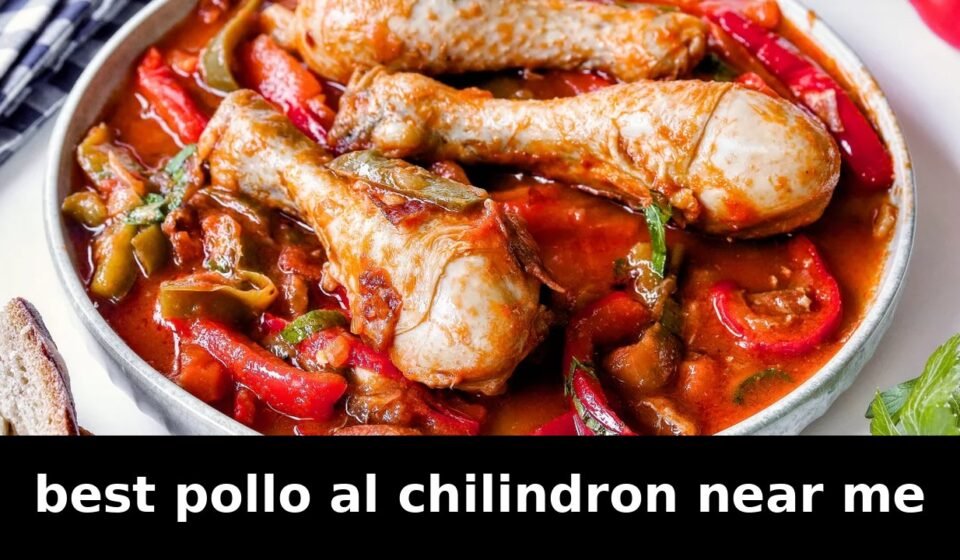
At its heart, the dish is chicken stewed in a sauce of peppers, tomato, onion, and garlic, with diced cured ham folded in for depth. The chicken is first browned in olive oil, then returned to the pot and simmered gently until the meat is tender and the sauce has thickened into something rich and glossy. Red bell peppers carry the sweetness, green bell peppers add a sharper, grassy note, and in many traditional versions the peppers are roasted and peeled first, which gives the sauce a smoky softness that raw peppers alone cannot match. Tomato binds the sauce, onion and garlic build its savoury base, and the ham, usually jamón serrano, adds a salty, cured depth.
The name itself tells you where the dish sits in Spanish cooking. Chilindrón refers to the sauce rather than to the chicken, which is why the same sauce appears with other meats in the same regions: lamb chilindrón and rabbit chilindrón are both established dishes, cooked on the same principle with the same pepper and tomato base. A kitchen that understands the sauce will usually understand the dish. A version that arrives as plain chicken in a thin tomato sauce, with no peppers worth noticing and no trace of ham, has missed the point of the name, however pleasant it may be as a meal in its own right.
It is also worth knowing that this is a dish of patience. Traditional accounts describe it being made with older, tougher birds that needed long, slow stewing to turn tender, and while modern kitchens mostly use younger chicken, the method has kept its slow character. A proper chilindrón is never rushed over fierce heat, because fierce heat tightens the chicken and leaves the peppers half-cooked. The sauce needs time for the tomato to lose its raw edge and for the peppers to collapse into sweetness. That slowness is the first thing to look for when judging a version near you.
best pollo al chilindron near me: The Ingredients That Define It
Every great version starts from the same short list, and learning that list is the fastest way to tell a serious kitchen from a casual one. The chicken usually comes as bone-in pieces, often drumsticks and thighs, because bone-in cuts stay juicy through a long simmer and give the sauce body as they cook. Breast meat alone can dry out over the same cooking time, so a kitchen that serves only lean breast in a thin sauce is already moving away from tradition. Skin-on pieces are also common, since the skin browns well at the start and adds richness to the pot.
The peppers are the soul of the sauce. Red bell peppers bring sweetness and colour, green bell peppers bring a fresher, slightly bitter edge, and the balance of the two decides much of the final character. Some kitchens roast their red peppers first, peeling away the charred skin and cutting the soft flesh into strips, which gives a deep, mellow sweetness. Others cook fresh peppers down slowly in the pot, which keeps a brighter, more vegetal note. Neither approach is wrong, and both are traditional. But a version with no real pepper presence, or with peppers still crunchy and raw-tasting, has not been cooked long enough or generously enough.
Tomato, onion, and garlic form the base. Ripe tomatoes, grated or chopped, cook down into the body of the sauce, while canned tomatoes are an accepted stand-in when fresh ones are out of season, since a stewed sauce forgives a good canned tomato far more readily than a salad would. Onion is cooked until soft and golden before the peppers join the pot, and garlic is added with care so that it perfumes the sauce without burning, since burnt garlic turns bitter and can spoil an otherwise fine stew. A generous amount of good olive oil is part of the dish rather than an extra, since it is the medium in which the chicken browns and the vegetables soften.
Then comes the cured ham, the ingredient that most clearly separates chilindrón from other chicken and pepper stews. Diced jamón serrano, and in the most traditional Aragonese versions ham from Teruel, is fried briefly with the vegetables so that its fat and salt melt into the sauce. It is not a garnish or an afterthought; it is a seasoning in its own right, and its cured, nutty flavour is what makes the sauce taste distinctly Spanish. A splash of dry white wine is also common, added to lift the sauce, and a little sweet paprika, known in Spain as pimentón, deepens the colour and warmth. Some kitchens add choricero pepper paste for a darker, earthier note, and a bay leaf or two is a frequent quiet addition.
| Detail | What it means for the dish |
|---|---|
| Origin | Northern Spain, traced to Zaragoza in Aragón, with strong traditions in Navarra, La Rioja, and the Basque Country |
| Main ingredient | Chicken, usually bone-in drumsticks and thighs, browned first and then stewed |
| Defining sauce | Chilindrón sauce: peppers, tomato, onion, garlic, and diced cured ham |
| Key peppers | Red bell peppers for sweetness and green bell peppers for a sharper edge, often roasted and peeled |
| Cured ham | Jamón serrano, traditionally ham from Teruel in the most Aragonese versions |
| Usual extras | Olive oil, dry white wine, sweet paprika, bay leaf, and sometimes choricero pepper paste |
| Cooking method | Slow simmer in one pot, roughly 30 to 50 minutes after browning, until the chicken is tender |
| Classic accompaniments | Fried potatoes, rice, or crusty bread for the sauce |
| Close relatives | Lamb chilindrón, rabbit chilindrón, and the Navarrese cousin dish cochifrito |
best pollo al chilindron near me: Regional Variations Worth Knowing
Like most dishes that grew up across several regions, pollo al chilindrón is not one rigid recipe but a family of closely related ones, and knowing the main variations will stop you from mistaking a legitimate regional difference for a mistake. In Aragón, the dish stays closest to its roots: the ham is prominent, the peppers are generous, and the sauce is allowed to cook down until it is thick and dark. Aragonese kitchens often treat the dish as a point of pride, and they tend to be the most faithful to the older style, with chicken stewed patiently and served with fried potatoes.
In Navarra, the same sauce appears with a slightly different accent. Navarrese cooking shares much of the Aragonese pantry, but it also has its own cousin dish, cochifrito, which uses lamb or young goat rather than chicken and adds lemon, garlic, and parsley for a brighter finish. A Navarrese menu may list cochifrito alongside chilindrón, and a kitchen that cooks both well is clearly comfortable with the whole tradition. Navarrese versions of the chicken dish itself tend to be a little lighter, sometimes with more emphasis on the peppers and a little less on the ham, though the core identity remains unmistakable.
La Rioja and the Basque Country add their own touches as well. Rioja, famous for its vegetables and its wine country, often brings excellent peppers to the dish, and some Rioja kitchens lean on roasted peppers more heavily, which gives a sweeter, smokier sauce. Basque versions sit comfortably within the same family, with the same respect for slow cooking and good olive oil. Beyond Spain, the dish has travelled with Spanish cooks and their families, and versions found abroad often reflect the pantry of their new home: canned tomatoes where fresh ones are scarce, or a different cured ham where jamón is hard to find. Those adaptations are honest ones, provided the heart of the dish is still intact.
best pollo al chilindron near me: How to Judge a Good Version Near You
When you are searching for best pollo al chilindron near me, the most useful skill is not finding the longest list of restaurants but learning to read the signs that separate a careful version from a careless one. Start with the menu. A serious kitchen will usually describe the dish in some detail: it may name the peppers, mention cured ham, or say that the chicken is stewed rather than grilled or fried. A menu that simply lists “chicken in tomato sauce” with no mention of peppers or ham gives you no reason to trust that chilindrón is what will arrive. Menus from northern Spanish restaurants, or from restaurants that describe their cooking as Aragonese or Navarrese, are often worth a closer look.
The plate itself tells you even more, and the first thing to check is the sauce. A good chilindrón sauce is thick enough to coat a spoon, glossy with olive oil, and deep red-orange in colour, with visible strips of pepper running through it. A thin, watery sauce that slides off the chicken suggests the stew was rushed or stretched with too much liquid, while a sauce that tastes mainly of raw tomato suggests the pot never had its full slow simmer. The peppers should be soft all the way through, sweet rather than sharp, and plentiful enough that every forkful carries some.
Next, look at the chicken. In a good version, bone-in pieces should yield easily, with meat that pulls away cleanly and stays moist, a result that only comes from gentle, unhurried cooking. Dry, tight, or rubbery chicken points to fierce heat or a short cooking time, and it is one of the clearest signs that a kitchen has cut corners. The ham should be present as a flavour rather than as visible chunks alone: you should taste its salty, cured depth in the sauce even where you cannot see a piece of it. If the dish tastes flat and one-note, with tomato doing all the work, the ham is probably missing or too timid.
Accompaniments are a smaller but telling clue. Fried potatoes are the classic partner, and they should be crisp outside and fluffy inside, ready to carry the sauce. Rice is a fine alternative, and crusty bread is almost essential, since a great chilindrón always leaves sauce worth saving. A kitchen that serves the stew with care will usually serve its partners with care too, while a kitchen that sends out soggy potatoes or stale bread has probably not lavished attention on the pot either. Taken together, these signs form a reliable picture, and they will serve you well whether you are choosing among Spanish stews in a large city or weighing up a single small restaurant near your home.
best pollo al chilindron near me: Questions to Ask Before You Order
Asking a few polite questions before you order can save a disappointing meal, and a good kitchen will welcome them rather than resent them. One of the most useful questions is whether the dish is stewed fresh each day or cooked in advance and reheated. Stews often improve with a night of rest, as the flavours settle and deepen, so a dish made the day before and gently reheated is no disgrace at all. What you want to avoid is a version cooked in a hurry to order, since a true chilindrón cannot be rushed into existence in fifteen minutes.
It is also worth asking which cut of chicken is used and whether cured ham is part of the sauce. A kitchen that can answer promptly, naming drumsticks and thighs and confirming the ham, is showing you that the dish is a considered part of its menu rather than a name borrowed for a generic stew. If you do not eat pork, this question matters twice over, since ham is central to the traditional recipe: ask whether a version without ham is possible, and accept that the result will be a different, lighter dish rather than a strict chilindrón. Similarly, if you avoid alcohol, ask whether wine is used in the sauce, since many kitchens add a splash of white wine.
best pollo al chilindron near me: What to Eat With It
Part of enjoying pollo al chilindrón is choosing the right partners for it, and tradition offers clear guidance here. Fried potatoes are the classic accompaniment in northern Spain, cut into chunks and fried in olive oil until crisp, and they serve a double purpose: they are satisfying in their own right, and they carry the sauce beautifully. Rice is a common alternative, especially in homes where the stew is served as a family meal, since it soaks up the sauce and stretches the dish to feed more people. Crusty bread, though, is the one partner that should never be skipped, because no matter what else is on the plate, there will be sauce left at the end, and bread is the proper tool for finishing it.
Starters and drinks are best kept simple when chilindrón is the main event. A light salad, a plate of cured meats, or a simple soup will open the meal without competing with the stew, while a heavy starter risks leaving you too full to enjoy the dish you came for. For drinking, a dry white wine suits the sauce well, echoing the wine often used in the pot, though still or sparkling water is a perfectly good partner and lets the peppers and ham speak for themselves. Dessert, if you have room, is best kept light as well: fresh fruit or a simple custard will close a rich, savoury meal far more gracefully than anything heavy.
best pollo al chilindron near me: Common Questions
Is pollo al chilindrón spicy? Usually it is not, at least not in the way that chilli-hot dishes are. Its warmth comes from sweet peppers, paprika, and the slow cooking of the sauce, which gives a gentle, rounded heat rather than a sharp burn. Some kitchens add a dried chilli for extra warmth, so if you are sensitive to heat it is worth asking, but a traditional version should be comfortable for most eaters, and its appeal lies in richness and sweetness rather than in fire.
What does the word chilindrón actually mean? It refers to the sauce itself, a pepper, tomato, onion, garlic, and ham sauce from northern Spain, rather than to any single meat. That is why the same name appears with chicken, lamb, and rabbit, and why the sauce is the true test of the dish. When a kitchen understands the sauce, it understands chilindrón, whatever meat it is served with.
Can it be made without ham or without wine? Yes, and many home cooks do so, whether for dietary reasons, for cost, or simply because that is how their family has always made it. Leaving out the ham gives a lighter, cleaner-tasting stew that is still recognisably in the chilindrón family, though it loses the cured depth that ham provides. Leaving out the wine is simpler still, since a splash of stock or water can take its place without changing the character of the dish.
Where is the dish most likely to be found outside Spain? Spanish restaurants in large cities are the most reliable place to look, especially those run by cooks from Aragón, Navarra, or La Rioja, or those whose menus show a serious interest in regional Spanish cooking rather than a generic tapas list. Smaller towns may have fewer options, but a family-run Spanish café or a restaurant with a rotating specials board can surprise you, and it is always worth asking, since chilindrón sometimes appears as a special even where it is not a permanent menu item. The same advice applies to chicken dishes in general: the kitchens that cook one stew with patience usually cook others with the same care.
Conclusion
The search for best pollo al chilindron near me ends best when you know what you are looking for, which is chicken stewed slowly with sweet peppers, tomato, onion, garlic, and cured ham until the sauce is rich and the meat is tender. Carry that picture with you, ask the questions that matter, trust kitchens that can answer them, and you will find a version near you that honours a great northern Spanish tradition.


