

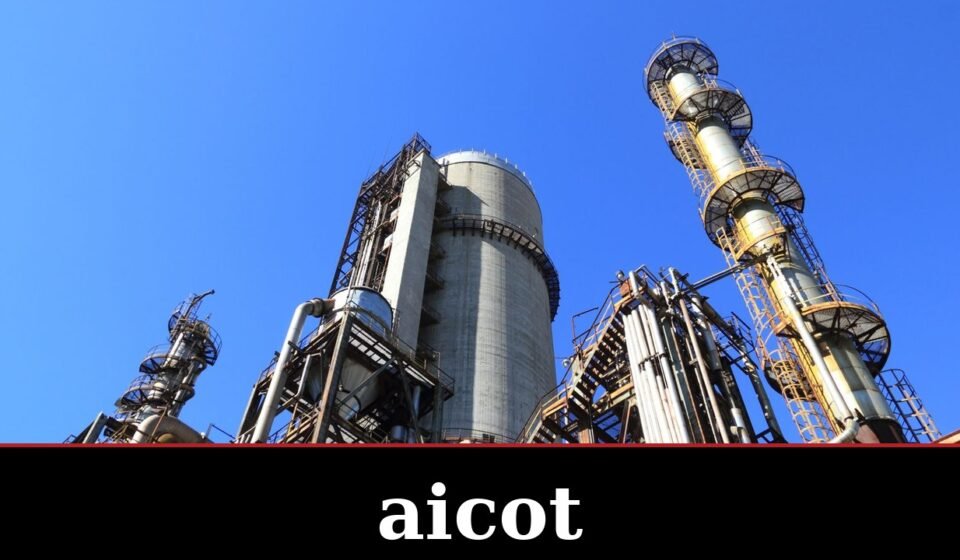
aicot: AI Cyber Defence for Operational Technology and the Other Meanings of the Name Explained

Introduction
aicot is a name that belongs to more than one thing, and the most current of them is a European cybersecurity project. AICOT stands for AI-Driven Cyber Defense for Operational Technology Environments in Critical Infrastructure, and it is a project funded by the European Union under its Digital Europe Programme. Its purpose is to protect the industrial systems that run power grids, water plants, factories and transport networks, using artificial intelligence to watch those systems for attacks that office security tools cannot see. The project is led by Logstail, a security company whose existing work covers security monitoring and data analytics.
The same four letters also name a patented solar safety technology from OMRON, an art festival held in Tokyo, an Italian association that protects food names, and a health-economics framework published in a medical journal. This article sets out what each aicot is, starting with the cybersecurity project, and marks what could not be checked as UNCONFIRMED instead of guessing.
aicot at a Glance
The table below gathers the checked facts about the main meanings of aicot in one place, so that a reader can tell them apart at a glance.
| Meaning | What it is | Who runs it | Key fact |
|---|---|---|---|
| AICOT Project | AI-driven cyber defence for operational technology | Led by Logstail | EU Digital Europe Programme, Grant Agreement No. 101249826 |
| OMRON AICOT | Anti-islanding control technology for solar inverters | OMRON Corporation | Detects islanding in under 0.2 seconds; Japan’s official standard |
| AICOT 2024 | Art in Country of Tokyo, an art festival | AICOT Executive Committee | 11 September to 20 October 2024, nearly 40 artists from 6 countries |
| AICOT Italy | Associazione Italiana Consorzi di Tutela | Italian consortium association | Protects DOP and IGP food names; based in Eboli, Italy |
| AICOT framework | Adaptive Impact-Cost Optimization Theory | Faruk Dayi, Kocaeli University | Healthcare, 2026; 15 OECD countries |
The AICOT Project: AI Defence for Operational Technology
Operational technology, usually shortened to OT, is the name for the computers and control systems that run physical processes: the programmable controllers in a power station, the sensors in a water treatment plant, the robots on a factory floor, the signalling on a railway. For decades those systems were kept apart from office networks. That separation has now thinned away, as industrial sites connect their control systems to office networks and remote monitoring, which also opens a path for attackers. The AICOT project exists because of that change, and its own site states the problem plainly: the increasing interconnection of OT environments with IT networks has created new cybersecurity challenges for critical infrastructure across the EU.
AICOT proposes an AI-driven platform built specifically for cyber defence in OT environments. It builds on Logstail’s existing SIEM and data analytics capabilities, and it adds machine learning, anomaly detection, OT protocol analysis and threat intelligence, so that industrial networks can be watched in real time and attacks can be found and answered as they happen. The platform is meant to be modular and production-ready, designed to fit into real industrial sites rather than to stay a laboratory demonstration. It will be validated in a pilot environment that replicates real-world OT systems.
The project is funded by the European Union’s Digital Europe Programme under Grant Agreement No. 101249826, and it aligns with the DIGITAL-ECCC-2024-DEPLOY-CYBER-07-KEYTECH call, which deploys trusted and scalable key technologies to reinforce the resilience of critical infrastructure. The project also states that it uses European-native technologies, which supports EU digital sovereignty and strengthens the cybersecurity supply chain. Its public pages carry a standard disclaimer that the views expressed are those of the authors and do not necessarily reflect those of the European Union or the European Cybersecurity Competence Centre.
How the aicot Platform Watches Industrial Networks
The aicot platform starts from the Logstail Security Suite, which already combines security monitoring with asset inventory, vulnerability scanning, patch management, cases and response workflows. That suite gives a security team a shared layer for watching infrastructure and linking network events to the assets affected. AICOT extends that foundation deeper into OT, adding OT-specific machine learning, anomaly detection, protocol analysis and AI-assisted threat detection. The difference is the subject matter: office security tools watch email, web traffic and file servers, while OT tools must understand industrial protocols and the normal rhythm of a plant that runs around the clock.
Anomaly detection is the heart of that approach. Instead of looking only for known attack signatures, the platform learns what normal looks like on a given industrial network and raises an alert when traffic or device behaviour departs from that pattern. That matters in OT, because many industrial devices run for fifteen to thirty years and cannot always be patched or replaced when a new weakness is found. A controller that has run the same process for a decade will show a steady, repeating pattern, and a sudden change in that pattern is a strong signal that something is wrong.
The platform also adds risk prioritisation and context-aware response, so that alerts are ranked by the danger they pose to the physical process rather than by their volume alone. An alert about a controller that runs a turbine matters more than an alert about a printer in the site office, and the response must fit the setting: shutting down a process abruptly can be as harmful as the attack itself. The project’s own writing stresses exactly that point, describing AI that knows when not to act as one of the design questions for automated response. Readers who want a plain overview of industrial cybersecurity practice will find the same ideas repeated there.
Threat Intelligence Sharing and the Trust Problem
One of the hardest problems in industrial cybersecurity is sharing what defenders learn. When one power station finds a new attack, other stations would be safer if they knew about it at once, yet operators are often reluctant to share. The aicot project names that reluctance directly on its own site, listing privacy, regulatory, competitive and trust concerns as the reasons operators hold back. A plant operator may fear that sharing details will expose its own weaknesses or hand a rival useful information. The result is that each operator defends alone, and attackers can reuse the same method against one site after another.
AICOT explores blockchain-backed cyber threat intelligence sharing as part of its answer to that problem. The idea is to give operators a way to exchange threat information that preserves privacy while keeping the shared records trustworthy and auditable. Blockchain-backed sharing is meant to provide privacy, trust, auditability and European interoperability, so that a recipient can check that a warning is genuine without learning who reported it or what happened inside the reporting plant. Whether that design will win the confidence of operators is UNCONFIRMED, because the project is still in development and its pilot results have not been published. The need for sharing became sharper in August 2026, when the NSA, CISA, FBI, Department of Energy and Environmental Protection Agency issued a joint advisory warning industrial control system operators about an active cyber threat targeting Siemens S7 Series PLCs, the controllers at the centre of countless industrial processes.
The Rules Behind aicot: NIS 2, CER and IEC 62443
The aicot project does not work in a legal vacuum. The European Union has widened its rules for the security of essential services through the Network and Information Security Directive, known as NIS 2, which imposes strict security duties, rapid incident reporting and heavy financial penalties on essential entities across energy, transport, health and water. Alongside it sits the CER Directive on the resilience of critical entities, and the IEC 62443 standard series, which sets out how industrial automation and control systems should be secured. The project’s own writing discusses all three, and it frames aicot as a way for operators to meet those duties in practice rather than on paper alone. AICOT also maps its defences to the Purdue Enterprise Reference Architecture, formalised under the ISA-95 standard, the layered map engineers use to describe an industrial site.
The emphasis on European-native technology also belongs in this picture. Backed by the EU Digital Europe Programme, the development of aicot strengthens domestic resilience by reducing reliance on external technology vendors and keeping sovereign control of critical defence infrastructure with public utility operators. That is a policy goal as much as a technical one, and the project states it openly. What the project does not state is how much funding it received in total, how many partners form its consortium, or when its pilot will report results. Each of those is UNCONFIRMED.
OMRON’s aicot: Stopping Solar Islanding in Under a Second
Long before the EU project, the same letters named a completely different technology. OMRON Corporation developed AICOT, short for anti-islanding control technology, to solve a safety problem in solar power. Solar systems keep generating electricity even when the grid supply is interrupted, a condition known as islanding. If islanding is not stopped at once, it can endanger workers repairing power lines, who may not know that some lines are still powered. Traditional anti-islanding mechanisms reduce that risk, but when several systems are installed close together, interference can cause those mechanisms to fail.
OMRON’s answer was a controller that detects outages by watching changes in the grid’s frequency rather than its voltage. Detecting islanding by monitoring voltage change is slow, and the performance of that approach was compromised by interference among solar inverters installed close together. OMRON engineers used MATLAB, Simulink and Simscape Electrical to develop the patented technology, modelling the plant with basic electrical components and running closed-loop simulations of the control system and the plant together, because testing the controller on real plant hardware was not feasible. The completed AICOT system can detect an islanding condition in less than 0.2 seconds, well inside the government standard of one second for single-unit tests.
The technology is in production, and its record is concrete. In one section of Ota, Japan, 554 AICOT-equipped solar inverters are installed with a total generation output of more than 2,100 kilowatts, and the technology has been adopted as Japan’s official standard. OMRON also validated the technology through extensive multi-unit field trials at the Pal Town Josai-no-Mori residential project in Gunma Prefecture. The development method itself brought measured gains: integration testing time was cut by more than half, and data analysis that once took four or five days was completed in a single day. Readers who follow solar power safety will recognise the same principle at work: detect the failure fast, shut the inverter down, and keep the people working on the lines safe.
The Other aicot Names: An Art Festival, an Italian Association and a Health Framework
The third aicot is an art festival. Art in Country of Tokyo 2024, shortened to AICOT 2024, ran from 11 September to 20 October 2024 across Shikinejima Island, the Tokyo 23 Wards and the Tama Area, and it was held for the second time that year. Nearly 40 artists from six countries took part, under the general direction of Sung Nam Han, and the festival was organised by the Art in Country of Tokyo Executive Committee with co-organisers from France, South Korea, Taiwan, Singapore and Belgium, and one of its venues was the Japan Undersea Art Museum, offshore of Nakanoura Beach on Shikinejima Island.
The fourth aicot is Italian. AICOT is also the Associazione Italiana Consorzi di Tutela, an association that promotes and protects certified DOP and IGP food products, and its site is aicot.it. Its work covers consortia including Nocciola di Giffoni IGP, Melannurca Campana IGP, Carciofo di Paestum IGP, Olio Colline Salernitane DOP and Rucola della Piana del Sele IGP, and its address is listed as Via Bagnolo S. Vito, 84025 Eboli, in the province of Salerno. It has nothing to do with cybersecurity, solar power or art, and it shares only the letters with the other three.
The fifth aicot is academic. Adaptive Impact-Cost Optimization Theory, also shortened to AICOT, is a framework introduced by Faruk Dayi of Kocaeli University for optimising budget allocation for digital health investments. Published in the journal Healthcare in 2026, it combines fuzzy logic and genetic algorithms, and it defines an Investment Priority Score as a function of cost, expected impact and implementation feasibility. Its analysis covers 15 OECD countries from 2018 to 2024, using public datasets from the WHO and the OECD.
What aicot Does Not Say About Itself
For all that the AICOT project publishes, it leaves several basic facts unstated. Its public pages do not name the full list of consortium partners, and they do not state the total amount of EU funding, the project’s start and end dates, or the date its pilot will report. No product price is given, because the platform is a funded project rather than a product on sale, and no list of pilot sites is published. Each of those details is UNCONFIRMED, and this article does not fill any of them in with a guess.
The same caution applies to the other meanings. The OMRON technology is documented in detail, yet its launch year is not stated in the MathWorks record, and the number of AICOT-equipped inverters beyond the Ota installation is UNCONFIRMED. The art festival’s 2024 edition is documented in its press release, yet whether a later edition is planned is UNCONFIRMED. A reader who wants the latest position should check the source directly, because the facts above are correct as of the date they were checked.
aicot Frequently Asked Questions
What is aicot?
aicot is the name of several different things, and the most current is the AICOT Project, which stands for AI-Driven Cyber Defense for Operational Technology Environments in Critical Infrastructure. It is a European Union funded project led by Logstail, building an AI-powered platform to protect industrial control systems in power, water, manufacturing and transport. The same letters also name OMRON’s solar safety technology, a Tokyo art festival, an Italian food association, and a health-economics framework.
Who leads the AICOT cybersecurity project?
The AICOT project is led by Logstail, a security company whose existing work covers SIEM, data analytics and security operations. The project builds on the Logstail Security Suite, adding OT-specific machine learning, anomaly detection, protocol analysis and AI-assisted threat detection. The full list of consortium partners is UNCONFIRMED, because the project’s public pages name only Logstail as the lead.
How is the AICOT project funded?
The AICOT project is funded by the European Union’s Digital Europe Programme under Grant Agreement No. 101249826. It aligns with the DIGITAL-ECCC-2024-DEPLOY-CYBER-07-KEYTECH call for trusted key technologies for critical infrastructure. The total funding amount is UNCONFIRMED, because the project’s public pages state the grant number but not the sum.
What is operational technology, and why does it need its own defence?
Operational technology, or OT, is the name for the computers and control systems that run physical processes, such as the controllers in a power station, the sensors in a water plant, the robots on a factory floor and the signalling on a railway. It needs its own defence because its devices run for fifteen to thirty years, cannot always be patched, and must keep a physical process running safely. Office security tools watch email and file servers, while OT tools must understand industrial protocols and the rhythm of a plant.
What is OMRON’s aicot?
OMRON’s AICOT is anti-islanding control technology for solar inverters, a patented system developed with MATLAB, Simulink and Simscape Electrical. It detects a grid outage by watching frequency changes and can detect an islanding condition in less than 0.2 seconds, stopping the inverter before it can endanger workers repairing power lines. It is in production, with 554 units installed in one section of Ota, Japan, and adopted as Japan’s official standard.
What was AICOT 2024?
AICOT 2024 was Art in Country of Tokyo, an art festival held from 11 September to 20 October 2024 across Shikinejima Island, the Tokyo 23 Wards and the Tama Area. It was held for the second time that year, featured nearly 40 artists from six countries, and was directed by Sung Nam Han. Its programme mixed video, sound, dance and poetry, with venues including the Japan Undersea Art Museum offshore of Nakanoura Beach.
Is aicot a product that can be bought?
No, aicot is not a product on sale. The AICOT cybersecurity project is an EU-funded development effort building a platform that will be validated in a pilot environment, and its public pages give no price and no sales channel. OMRON’s AICOT is a technology inside solar inverters that are in production, rather than a standalone product.
Where can the latest information about aicot be found?
The cybersecurity project publishes updates on its own site at aicotproject.eu and on its LinkedIn and X accounts. The OMRON technology is documented in a MathWorks user story. The art festival’s records sit on aicot.art, the Italian association on aicot.it, and the health framework in the journal Healthcare, volume 14, article 1540, published in 2026. Each source covers only its own aicot.
Conclusion
aicot is a name shared by five different things, and the one that matters most today is the AICOT cybersecurity project, an EU-funded effort led by Logstail that uses artificial intelligence to defend the operational technology running Europe’s critical infrastructure, from power stations to water plants. Beside it stands OMRON’s older and fully proven AICOT, a solar safety technology that detects islanding in under 0.2 seconds and has become Japan’s official standard, while the art festival, the Italian association and the health framework show how the same four letters can carry entirely separate meanings. What the project still owes its readers is the basic record of its own progress, including its partners, its funding total and its pilot results, and until those appear the honest position is to state what is verified and mark the rest UNCONFIRMED. A reader who checks which aicot they have found will always land on the right one.