


Introduction
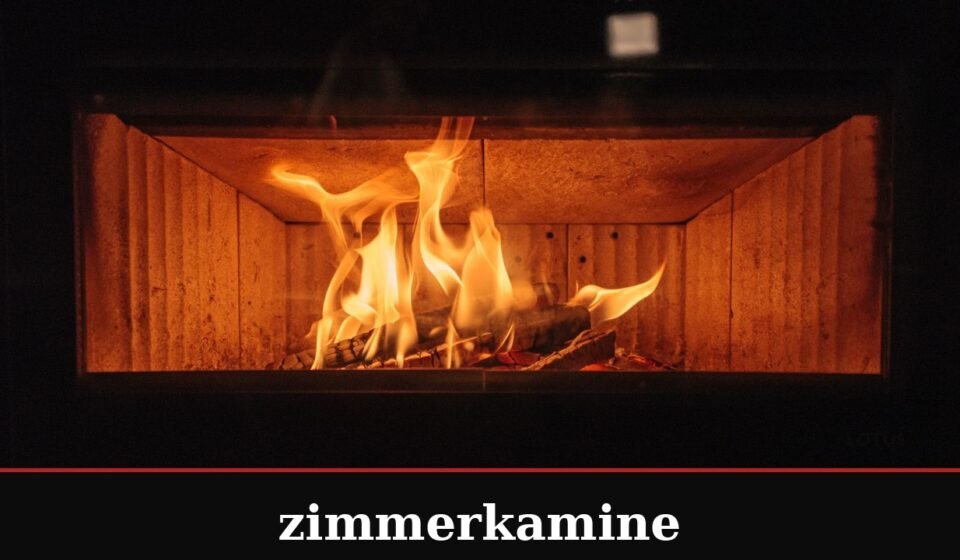
Zimmerkamine bring the sight and warmth of a fire into a living room without the building work that a traditional fireplace demands. The word is German, and it covers a whole family of indoor fireplaces, from electric models that paint a flame with light to wood-burning stoves that heat a home through a cold winter. In modern shops the term is used most often for electric and bioethanol designs that need no chimney at all. This article explains what the word means, which designs it covers, and what each one costs, using facts from German heating guides and retailer listings. Anything that could not be verified is marked UNCONFIRMED rather than filled in with a guess.
One point belongs at the start, because it clears up the most common misunderstanding. Zimmerkamine is not the name of a company, a brand, or a single product. It is a German word for a domestic fireplace, used for many different designs that share one purpose: a fire, or the look of a fire, inside a room.
The German Roots of Zimmerkamine
Zimmerkamine comes from two German words. Zimmer means room, and Kamin means fireplace, so the literal translation is room fireplace. In German-speaking countries the word describes an indoor fireplace built for a living space, as opposed to a large structural fireplace that forms part of the building itself. German specialist retailers use the term widely, often for electric and bioethanol models that create a fireplace atmosphere without a chimney connection.
The history behind the word reaches back much further than the modern electric models. Wood stoves have heated homes in Central Europe since the middle of the fifteenth century, according to the German heating guide heizung.de, and the tiled stove known as the Kachelofen grew out of that long tradition. A Kachelofen is a masonry stove faced with tiles, and its heavy body stores heat from a fire and releases it slowly into the room long after the flames have died down.
Electric Zimmerkamine and the Flame Effect Without a Chimney
Electric zimmerkamine use electricity to create a simulated flame through lighting, reflective surfaces, or other visual technologies. There is no combustion inside the unit, so there is no smoke, no ash, and no need for a chimney or a flue. Most models also carry a built-in fan heater, and the flame effect can run on its own while the heater stays off, which means the fireplace look is available in warm weather as well as in winter. A typical electric model draws 1,000 to 2,000 watts with the heater running, while the flame effect alone uses only about 10 to 40 watts, according to a consumer guide.
At an electricity price of about 0.15 euro per kilowatt-hour, the flame alone costs around 0.03 euro for five hours, while heating at 2,000 watts costs around 0.30 euro per hour. The heat from an electric model suits a single room rather than a whole house, and the same guide puts the practical reach at a room of up to about 20 square metres. For a small or medium room, a flat, or a rented home, the same limit is a strength, because the unit plugs into a normal socket and needs no building work at all. Freestanding models stand on the floor like a small stove, wall-mounted models hang on the wall like a picture, insert models sit inside a niche or a plasterboard wall, and portal models come with a surround that leans against the wall.
Bioethanol Zimmerkamine and Real Flames From Liquid Fuel
Bioethanol zimmerkamine create a genuine flame by burning a specially formulated liquid fuel. Bioethanol is an alcohol-based fuel made from plant material, and it burns with a real flame. The fuel produces no smoke and no ash, and the fireplace needs no chimney, no flue, and no connection to a gas supply, so bioethanol models come in tabletop, freestanding, wall-mounted, and built-in forms. Retail guides describe bioethanol models as the most popular choice for buyers who want a genuine fire experience without a chimney, although that popularity claim is UNCONFIRMED, because no independent sales figures were found to support it.
The freedom from a chimney comes with a clear condition. Bioethanol is a flammable liquid, so the fuel must be stored safely, the burner must never be refilled while it is lit, and the maker’s safety instructions must be followed exactly. The room also needs fresh air while the burner runs, because a real flame consumes oxygen and releases water vapour and carbon dioxide into the room. The heat that a bioethanol model gives out is real, but retail descriptions present these models first as a source of atmosphere, with heat as a secondary gain.
Water Vapour Zimmerkamine and Flames Made of Mist and Light
Water vapour zimmerkamine are the most technologically sophisticated of the electric designs. They use ultrasonic technology to turn water into a fine mist, and coloured LED light shines through the mist to create a flame that looks remarkably like a real fire. The mist rises like smoke, and the light gives it the colour and flicker of burning wood, so the effect is more convincing than a flat LED flame image. There is no real fire inside the unit, no combustion, and no heat from the flame itself, although many water vapour models also carry a heater. The unit needs a power supply and a regular refill of water, and the tank must be kept clean. The flame gives no heat of its own, and the unit costs about 100 to 200 euro more than a standard electric model of the same size.
Wood-Burning Zimmerkamine, Kachelofen and Schwedenofen
Wood-burning zimmerkamine are the oldest designs in the family, and they are still the ones that give the most heat. The classic form in German homes is the Schwedenofen, a freestanding steel stove with a large firebox and a glass door through which the fire can be watched. A Schwedenofen gives its heat quickly, in the form of radiant warmth from its steel body, and the room feels warm soon after the fire is lit. Once the fire dies down, the heat falls quickly, because a steel body holds little warmth of its own. Guide prices start at about 200 euro for a Schwedenofen, according to heizung.de.
The Kachelofen works in the opposite way. Its heavy masonry body, faced with tiles, absorbs the heat of a short, hot fire and releases it slowly over many hours, so the room stays warm long after the flames have gone. A Kachelofen starts at about 2,500 euro, and the German guide helpster.de puts the range for a tiled stove at 1,500 to 5,000 euro, with the setting of the stove by a mason adding 200 to 5,000 euro. Every wood-burning stove needs a chimney. If the house has none, a stainless steel chimney can be fitted inside or outside along the facade, at a cost of about 800 to 1,000 euro, while connecting a stove to an existing chimney costs about 200 to 500 euro. In Germany the inspection of a new stove by a chimney sweep is legally required, and it costs about 50 to 150 euro.
Gas and Pellet Zimmerkamine
Gas zimmerkamine burn natural gas or propane and give a clean, convenient flame at the touch of a switch. They produce no ash and no wood to carry, and the flame can be set to a chosen size, so the heat follows the setting rather than the state of a wood fire. A gas fireplace needs a gas connection and a flue, and the installation must be carried out by a certified installer, because a gas appliance that is fitted badly is a danger to the whole household. Gas models suit a home that already has a gas supply and wants real flames without the daily work of a wood fire.
Pellet zimmerkamine burn pressed wood pellets, small cylinders of compressed wood or biomass, and they are known for high efficiency and low emissions. A pellet stove feeds fuel automatically from a hopper, so it can run for hours without attention, and the fire can be controlled with a thermostat. Most pellet stoves need a power supply for the feed mechanism and the fan, so they stop working in a power cut, and that is a limit worth knowing in a home where the power supply is unreliable. Both designs sit in the middle of the family: real flames and real heat, a flue and professional installation, and less daily work than a wood stove.
Zimmerkamine Costs, Purchase, Installation and Running Costs
The cost of zimmerkamine changes sharply with the design, and the purchase price is only the first part of it. An electric model can cost less than 100 euro and needs no installation at all, while a tiled stove can cost several thousand euro before the mason and the chimney sweep are paid. The table below gathers the guide prices found in German sources; all figures are guides, not fixed prices.
| Design | Purchase guide | Installation | Running cost notes |
|---|---|---|---|
| Electric, freestanding | 80 to 250 euro | None, normal socket | Flame 10 to 40 watts; heating 1,000 to 2,000 watts |
| Electric, wall-mounted | 150 to 450 euro | Wall bracket, socket nearby | Same as above |
| Electric, insert | 200 to 800 euro | Niche or plasterboard wall | Same as above |
| Electric, portal | 300 to 900 euro | Stands against the wall | Same as above |
| Water vapour electric | 100 to 200 euro more than standard electric | Power socket, water refills | Electricity plus water, flame gives no heat |
| Bioethanol | Varies widely | None, no chimney needed | Fuel price varies |
| Gas fireplace | 750 to 3,000 euro | Gas connection, flue, certified installer | Gas tariff, annual service |
| Wood stove, Schwedenofen | From 200 euro | Chimney connection 200 to 500 euro | Wood, price varies by region and season |
| Kachelofen, tiled stove | 1,500 to 5,000 euro | Mason 200 to 5,000 euro; sweep 50 to 150 euro | Wood |
| Pellet stove | 800 to 1,500 euro | Flue, power supply for the feed | Pellets bought in bags, price varies |
| Water-carrying stove | 1,000 to 4,000 euro | Connection to central heating | Wood or pellets, feeds the house system |
Running costs follow the same pattern: lowest for the flame alone on an electric model, highest where fuel must be bought in bulk. An electric model with the flame only costs around 0.03 euro for five hours at an electricity price of about 0.15 euro per kilowatt-hour, while heating at 2,000 watts costs around 0.30 euro per hour at the same price. Wood costs vary by region and by season.
Choosing Zimmerkamine for a Room, Size, Placement and Heat
Choosing zimmerkamine for a room starts with the size of the room and the heat that is wanted from the fireplace. An electric model warms a room of up to about 20 square metres, so it fits a normal living room, a bedroom, or a study, and it falls short in a large open-plan space. A wood stove or a pellet stove can heat a much larger area, and a tiled stove can warm a room for hours after a single fire, but both need a chimney and a place for fuel. A bioethanol model gives a real flame and some warmth, and it fits a room where atmosphere matters more than heat.
Placement matters as much as size. A consumer guide for electric fireplaces recommends an inner wall rather than a wall under a window, because warm air from a fireplace under a window drifts toward the cold glass instead of into the room. The same guide recommends keeping at least one metre clear in front of the hot-air outlet, away from curtains and sofas, and setting a wall-mounted model so that its lower edge sits 40 to 60 centimetres above the floor, at eye level from the sofa. The home heating choice that lasts fits the room, the fuel available at a fair price, and the daily work the owner is willing to give.
Zimmerkamine Safety, Ventilation and Maintenance
Safety is part of every fireplace, and it changes with the design. A real flame consumes oxygen, so a room with a wood, gas, or bioethanol fire needs fresh air, and the ventilation that the maker specifies should never be blocked. A wood stove needs its chimney swept and inspected, and in Germany the inspection is legally required for a new stove, at a cost of about 50 to 150 euro. A gas fireplace needs its annual service by a certified installer, and a pellet stove needs its hopper, its feed mechanism, and its flue kept clean.
Electric and water vapour models ask far less, but they still need care. The power cable should be checked for damage, the vents should be kept clear of dust, and the water tank of a vapour model should be emptied and cleaned if the unit is left unused for a long time. A bioethanol burner needs the most careful handling, because the fuel is flammable and the flame is real. The burner must cool fully before it is refilled, the fuel must be stored away from the fireplace and away from children, and the maker’s instructions must be followed exactly.
zimmerkamine Frequently Asked Questions
What does zimmerkamine mean?
Zimmerkamine is a German word formed from Zimmer, meaning room, and Kamin, meaning fireplace, so the literal translation is room fireplace. It describes an indoor fireplace made for a living space, and it is not the name of a company, a brand, or a single product. In modern retail the term is often used for electric and bioethanol fireplaces that need no chimney. It also covers wood stoves, gas fireplaces, pellet stoves, and water vapour models.
Do zimmerkamine need a chimney?
It depends on the design. Electric, bioethanol, and water vapour zimmerkamine need no chimney at all. Wood-burning, gas, and pellet zimmerkamine do need a flue or a chimney, because they burn fuel and produce exhaust gases that must leave the house safely.
Are electric zimmerkamine expensive to run?
The flame effect alone is cheap to run, while the heater is the part that uses real power. A typical electric model uses about 10 to 40 watts for the flame effect and 1,000 to 2,000 watts when the heater is running. At an electricity price of about 0.15 euro per kilowatt-hour, the flame alone costs around 0.03 euro for five hours, while heating at 2,000 watts costs around 0.30 euro per hour.
Do bioethanol zimmerkamine give real heat?
Yes, a bioethanol fireplace gives a real flame and real warmth, because it burns liquid bioethanol fuel made from plant material. The flame is genuine, and the heat can be felt in the room, but retail descriptions present these models first as a source of atmosphere, with heat as a secondary gain. A bioethanol model is therefore a strong choice for a room where a real flame is wanted without a chimney.
How much does a zimmerkamine cost?
Guide prices run from about 80 to 250 euro for a freestanding electric model, 150 to 450 euro for a wall-mounted model, 200 to 800 euro for an insert, and 300 to 900 euro for a portal model. A gas fireplace costs about 750 to 3,000 euro, a Schwedenofen wood stove starts at about 200 euro, a pellet stove costs about 800 to 1,500 euro, and a Kachelofen tiled stove costs about 1,500 to 5,000 euro. Installation adds to those figures, from nothing for an electric model to 200 to 500 euro for a chimney connection and 50 to 150 euro for the chimney sweep inspection that German law requires.
Are zimmerkamine safe in a flat?
Electric, bioethanol, and water vapour zimmerkamine suit a flat, because they need no chimney, no gas connection, and no building work. A freestanding electric model plugs into a normal socket, and a bioethanol model can move from one room to another, so both fit a rented home. Wood, gas, and pellet designs do not suit most flats, because they need a flue, a fuel supply, and professional installation.
What is a Kachelofen?
A Kachelofen is a tiled masonry stove, and it is one of the oldest designs in the zimmerkamine family. Its heavy body, faced with tiles, absorbs the heat of a short, hot wood fire and releases it slowly over many hours, so the room stays warm long after the flames have died down. A Kachelofen costs about 1,500 to 5,000 euro, plus 200 to 5,000 euro for the mason, and it needs a chimney and a fireproof base.
How do I maintain a zimmerkamine?
Maintenance depends on the design, and a retail guide recommends servicing a fireplace or stove at least once a year. A wood stove needs its chimney swept and inspected, and in Germany the inspection by a chimney sweep is legally required for a new stove. A gas fireplace needs an annual service, and a pellet stove needs its hopper, feed mechanism, and flue kept clean. An electric model needs its vents kept clear of dust. A bioethanol burner must cool fully before it is refilled.
Conclusion
Zimmerkamine cover a wide family of indoor fireplaces, from an electric unit that paints a flame with light to a tiled stove that warms a room for hours after a single fire, and the right choice follows the room, the heat that is wanted, and the work the owner is willing to take on. Electric and bioethanol designs suit a flat with no chimney, wood and pellet designs suit a house where lasting heat matters, and gas designs suit a home that already has a gas supply. The costs here are guides from German sources, so the local price of fuel and electricity should be checked before buying. With the size matched to the room, the placement planned with care, and the maintenance kept up each year, a zimmerkamine gives a home a warm centre for many winters.