

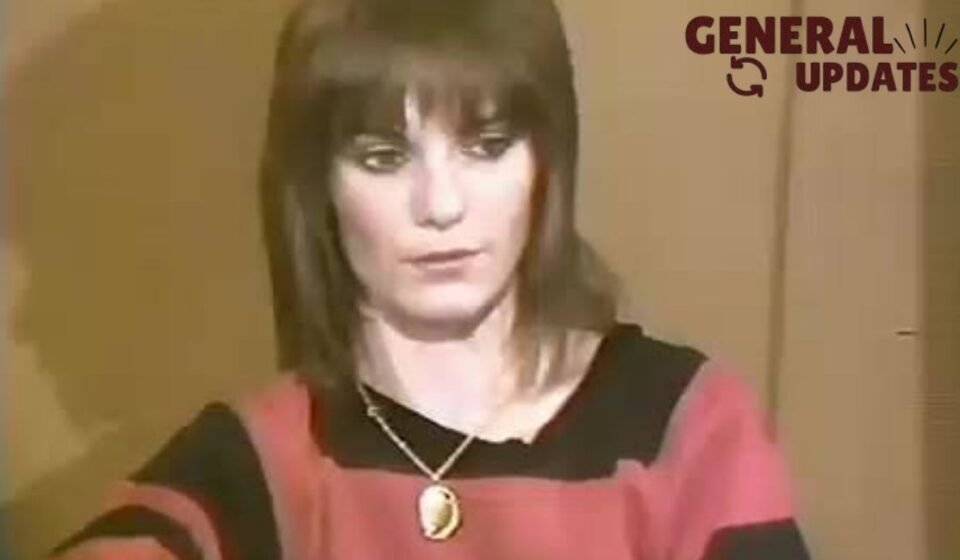

Who Is Sue Menhenick?
In the golden age of British television, when Thursday evenings meant families gathering around the set for the latest chart hits, few figures embodied the glamour, energy and pure entertainment of the era quite like Sue Menhenick. As a core member of the legendary dance troupes that lit up Top of the Pops, Sue Menhenick brought precision, charm and an unmistakable presence that helped define an entire generation’s viewing habits. From the sequined routines of Pan’s People through the short-lived experiment of Ruby Flipper and into the long, successful run of Legs & Co, her career spans more than seven years of near-constant appearances on the BBC’s flagship music programme. Today, her name still resonates with fans who remember the days when professional dancers interpreted the week’s biggest songs with inventiveness and style that no music video could quite match.
Early Days with Pan’s People

The story of Sue Menhenick begins in the mid-1970s, a time when Top of the Pops was at the height of its cultural power. Pan’s People had already become household names, their weekly performances as much a part of the show as the charts themselves. When Louise Clarke left the group in 1974 to start a family, an open audition brought in a young dancer who would go on to become one of the most recognisable faces of the programme. Sue Menhenick, then still in her late teens, joined the line-up and quickly proved herself capable of matching the high standards set by the existing members. The pressure was intense: the troupe rehearsed at pace, often learning complex routines in a matter of days, and every Thursday the nation was watching. Yet she adapted with the professionalism that would mark her entire career.
By the time Pan’s People wound down in the spring of 1976, Sue Menhenick had already established herself as a reliable and versatile performer. The transition that followed proved more turbulent. Choreographer Flick Colby, who had guided Pan’s People for years, decided to try something different.
The Brief Era of Ruby Flipper
Together with former Pan’s Person Ruth Pearson, Flick Colby assembled Ruby Flipper, a mixed-gender and mixed-race troupe that included both Sue Menhenick and fellow Pan’s People alumnus Cherry Gillespie. The new group made its debut in May 1976, dancing to The Stylistics’ version of “Can’t Help Falling in Love.” For a few months the experiment continued, but audience research and internal BBC feedback suggested that many viewers preferred the all-female format they had grown used to. By October 1976 Ruby Flipper was disbanded.
Rather than step away, Sue Menhenick moved seamlessly into the next chapter. Three of the female members of Ruby Flipper – Sue Menhenick, Lulu Cartwright and Patti Hammond – were retained for a new all-girl troupe. They were joined by Gill Clark, Pauline Peters and Rosemary Hetherington. Initially billed simply as the Top of the Pops Dancers, the group was formally named Legs & Co after a viewer competition.
Life and Longevity with Legs & Co
Their first official appearance under the new name came in early November 1976. The name stuck, and so did the formula. For the next five years Legs & Co provided the visual centrepiece of countless Top of the Pops episodes, interpreting everything from disco anthems to new-wave hits with the same blend of athleticism and theatricality that audiences had come to expect.
What set Sue Menhenick apart was both her longevity and her consistency. She remained with Legs & Co throughout their entire run on the programme, making her the second-longest serving dancer on Top of the Pops after Ruth Pearson. By the time the troupe made their final regular appearance in 1981, she had accumulated an extraordinary number of performances across three successive groups. On 17 December 1981 she was given a special farewell: a solo dance to Jon & Vangelis’s “I’ll Find My Way Home.” Flick Colby arranged the moment as a thank-you, and it marked the end of more than seven years of continuous association with the show. In a final twist, the end credits that night listed her as a member of Zoo, the larger mixed troupe that briefly succeeded Legs & Co, giving Sue Menhenick the unique distinction of having been formally credited with four different Top of the Pops dance groups.
Beyond the Television Studio
Beyond the weekly television appearances, the life of a Top of the Pops dancer in those years was demanding and varied. Rehearsals took place in London studios, often under tight deadlines. Costumes changed week by week – one moment sequins and feathers, the next something more conceptual or humorous. The girls also worked outside the BBC, performing on continental television, in cabaret and for the Forces. After leaving the programme, Legs & Co continued for several years as a touring act, taking their show to venues in the Middle East, Ireland and elsewhere. Sue Menhenick remained part of that post-television incarnation, helping to keep the spirit of the troupe alive long after the cameras had stopped rolling.
Her screen credits extend beyond Top of the Pops. In 1978 she appeared, uncredited, as a disco dancer in the film The Stud. Five years later she featured as a dancer in Monty Python’s The Meaning of Life. These brief film roles underline the versatility that television audiences had already recognised. In later years she has spoken warmly in interviews about the camaraderie of the groups, the challenges of keeping up with rapidly changing musical styles, and the particular satisfaction of creating a complete performance rather than simply illustrating a song. Retrospective programmes such as Top of the Pops: The Story of 1978, The Story of 1979 and The Story of 1981 have given her opportunities to reflect on the era, and she has remained a popular figure among fans who continue to share and celebrate the old footage online.
The Cultural Impact of Sue Menhenick

The cultural context in which Sue Menhenick worked is worth remembering. In the 1970s and early 1980s, Top of the Pops was appointment television. Music videos were still in their infancy, and many acts did not appear in person. The resident dance troupe filled that gap, turning abstract records into memorable visual experiences. Critics sometimes dismissed the dancers as mere decoration, yet the skill involved was considerable. The ability to learn a new routine quickly, to convey the mood of a song without words, and to maintain energy under studio lights required professional training and stamina. Sue Menhenick possessed those qualities in abundance, which explains why she lasted longer than most of her contemporaries.
Looking back from the perspective of modern British television, the world she inhabited feels almost distant. Charts are now dominated by streaming, and dance troupes of that kind have largely disappeared from mainstream music programming. Yet the affection for Pan’s People, Ruby Flipper and Legs & Co remains strong. Fans still debate favourite routines, swap stories of childhood viewing, and seek out interviews with the women who once occupied those studio floors. In that conversation, Sue Menhenick occupies a special place. She was not merely a participant; she was a constant presence across the most significant years of the Top of the Pops dance tradition.
Also read: Phil Rosenthal Net Worth: How the Creator of Everybody Loves Raymond Built a £150 Million Fortune
A Lasting Place in British Television History
Her career also illustrates the practical realities of life as a working dancer in the British entertainment industry of the time. Contracts were rarely long-term, the work was physically demanding, and public recognition did not always translate into lasting financial security. Many of the dancers moved into teaching, choreography, cabaret or entirely different fields once the television opportunities diminished. Sue Menhenick’s willingness to continue performing after the Top of the Pops years ended speaks to a genuine love of the craft. Whether on a television stage in London or a cabaret floor overseas, she brought the same professionalism that had first earned her a place in Pan’s People.
For those who grew up watching her, the memories are specific and vivid: the way a particular routine captured the spirit of a hit single, the shared laughter in living rooms when the choreography turned playful, the quiet admiration for the technical skill on display. Sue Menhenick helped create those moments night after night. In doing so she contributed to a distinctive chapter of British popular culture – one that combined music, movement and television in a way that has never been precisely replicated.
The passage of time has only deepened appreciation for the work she and her colleagues produced. What once seemed ephemeral now looks like a carefully crafted part of the national television heritage. Archives preserve the performances; fans keep the conversation alive; and occasional reunions or documentary appearances allow newer audiences to discover the artistry involved. Through it all, the name Sue Menhenick continues to stand for continuity, quality and the pure pleasure of dance on the small screen.
In an industry that often discards its performers once the immediate spotlight fades, her longevity and the respect she still commands are themselves achievements. From a teenage newcomer stepping into the shoes of an established Pan’s Person to the dancer given a solo farewell after more than seven years, Sue Menhenick’s journey mirrors the evolution of Top of the Pops itself during one of its most vibrant periods. She remains, for many, the embodiment of an era when British television celebrated both the music of the moment and the dancers who brought it to life.
Frequently Asked Questions
Who is Sue Menhenick?
Sue Menhenick is a British dancer best known for her long association with the Top of the Pops dance troupes Pan’s People, Ruby Flipper and Legs & Co.
When did Sue Menhenick join Pan’s People?
She joined Pan’s People in 1974, replacing Louise Clarke after an open audition.
Was Sue Menhenick in Legs & Co?
Yes, she was an original and long-serving member of Legs & Co from their formation in 1976 until 1981.
What was Sue Menhenick’s final Top of the Pops appearance?
Her final appearance was a solo dance to Jon & Vangelis’s “I’ll Find My Way Home” on 17 December 1981.
Did Sue Menhenick appear in any films?
She appeared as a dancer in The Stud (1978) and Monty Python’s The Meaning of Life (1983).
Why is Sue Menhenick considered unique among Top of the Pops dancers?
She is the only dancer formally credited with membership of four different Top of the Pops troupes and ranks as the second-longest serving dancer on the programme.



[…] Sue Menhenick: The Enduring Legacy of Top of the Pops’ Longest-Serving Dance Icon […]