



Search the name Abraham Quiros Villalba and you quickly enter a peculiar corner of the internet. One page paints him as a Costa Rican oilman who sold wells in Saudi Arabia to build solar farms in Texas. Another casts him as an early Bitcoin investor now building AI trading tools. A third turns him into a 19th-century Galician musical prodigy who died young of tuberculosis. Elsewhere he appears as an architect of floating forests or a Costa Rican politician. The stories conflict, the details shift, and independent verification is thin on the ground.
Yet one version of Abraham Quiros Villalba stands on firmer ground. In Spain, Abraham Quirós Villalba works as a philologist and content editor for Tododisca, a digital outlet based in Jerez de la Frontera that has become a leading Spanish-language source on disability, dependency, accessibility and social benefits. The platform reaches millions of readers each month across Spain, Latin America and Spanish-speaking communities in the United States. His byline appears on hundreds of practical articles explaining Social Security payment schedules, disability claims, cost-of-living adjustments and related bureaucratic processes. That work is documented on Muck Rack and reflected in Tododisca’s own team listing.
For British readers trying to cut through the noise, the contrast is instructive. In an age when search results can be flooded with polished but unsubstantiated biographies, the story of Abraham Quiros Villalba offers a useful case study in distinguishing verifiable professional activity from the digital folklore that often accretes around a name.
The Documented Work of a Spanish Philologist

Abraham Quirós Villalba studied Hispanic philology. Spanish sources link him to the University of Cádiz, where a grounding in language, literature and communication prepared him for editorial work. By the early 2020s he was contributing to Tododisca as a redactor. The site’s mission is practical: help people with disabilities, older adults and their families navigate complex systems of benefits, rights and daily supports. Its founder, Francisco Zuasti, has spoken openly about his own spinal injury and the gaps in accessible information that motivated the project. The team includes people with different abilities, and the outlet has received Spanish journalism and social-impact awards for its coverage.
Within that environment, Abraham Quiros Villalba produces clear, service-oriented content. Typical pieces walk readers through the American Social Security Administration’s payment calendar, explain maximum benefit amounts after annual cost-of-living adjustments, or outline steps for appealing a disability determination. The writing is aimed at Spanish speakers who need accurate, up-to-date guidance rather than abstract policy discussion. Volume matters here: Muck Rack associates more than a thousand articles with the byline, indicating sustained output rather than occasional contributions.
This is not glamorous work. It is the unglamorous, high-value labour of translating official rules into language ordinary people can use. For a British audience familiar with the challenges of navigating Personal Independence Payment, Attendance Allowance or the State Pension, the parallel is obvious. Clear information reduces stress, prevents missed deadlines and helps people claim what they are entitled to. Abraham Quiros Villalba’s published record shows a professional focused on exactly that task.
Why the Internet Invented Multiple Abrahams
The proliferation of alternative biographies is harder to ignore. Self-published sites and content farms recycle near-identical narratives: engineering degree in the 1990s, oil investments in the Middle East, a moral and financial pivot to utility-scale solar in Texas, early Bitcoin holdings sold in part around 2023, and current work on AI investment tools. Birthplaces swing between Costa Rica and Spain. Dates of birth vary. Corporate records, industry press or regulatory filings that would corroborate large-scale energy projects or major crypto activity under this exact name are not readily available in public sources.
Some pieces acknowledge the thinness of the evidence. Others treat the entrepreneurial story as established fact. A few go further and invent entirely different lives—child prodigy composer, green architect, Central American business magnate. The pattern is familiar to anyone who has watched search-engine optimisation practices evolve. A relatively uncommon name can become a vehicle for keyword-rich pages designed to capture curiosity traffic. Once a few such pages exist, automated content systems and low-quality aggregators amplify them, creating the impression of a well-documented public figure when independent confirmation is scarce.
Abraham Quiros Villalba the editor does not appear to have fuelled these narratives. His visible professional footprint remains the Spanish-language benefits journalism. The divergence between that footprint and the colourful online legends is itself useful information for readers. It illustrates how quickly a name can acquire an unearned mythology and why scepticism remains a necessary tool when researching individuals online.
What British Readers Can Learn from the Pattern
The case of Abraham Quiros Villalba touches several issues that matter on this side of the Channel. First is the reliability of information about professionals whose work crosses language and national borders. Tododisca serves a Spanish-speaking diaspora that includes people living in the United Kingdom. Clear guidance on benefits systems—whether Spanish, American or, by analogy, British—has real welfare consequences. When search results mix verified editorial work with unverified entrepreneurial claims, readers can be misled about expertise and authority.
Second is the broader challenge of digital identity. British regulators and consumer-protection bodies have spent years warning about investment scams that trade on fabricated success stories. While there is no public evidence that the solar-and-crypto narratives attached to this name are being used for fraud, the ease with which such stories spread underlines the need for caution. Anyone encountering claims of extraordinary returns, exclusive investment opportunities or insider AI tools should treat them with the same scrutiny applied to any unsolicited financial advice.
Third is the value of primary sources. When researching a name, the most reliable starting points are often institutional affiliations, bylines on established outlets, professional registries and contemporaneous reporting. In this instance, Tododisca’s team page and the volume of published articles under the Quirós Villalba byline provide a concrete anchor. The absence of corresponding anchors for the oil-to-solar storyline is equally telling.
The Practical Contribution of Benefits Journalism
It is worth lingering on the substance of the work that can be verified. Explaining Social Security rules to Spanish speakers is not trivial. Payment dates vary by birth date. Cost-of-living adjustments alter maximum benefits. Disability determinations involve medical and vocational criteria that many applicants find opaque. An editor who consistently produces accurate, timely pieces on these topics performs a public service. Readers who understand the calendar are less likely to face cash-flow crises. Those who know the appeal process are better placed to challenge incorrect decisions.
Tododisca’s broader coverage of accessibility, dependency and older people’s issues adds context. In Spain, as in Britain, demographic ageing and the rising number of people living with long-term conditions create constant demand for reliable information. Media outlets that specialise in these areas and employ writers with linguistic training can reach audiences that mainstream generalist coverage sometimes overlooks. Abraham Quiros Villalba’s philological background is relevant here: precision in language is an asset when the subject matter is legal entitlements and bureaucratic procedure.
For UK-based Spanish speakers or professionals supporting them, awareness of such resources can be practical. Benefits systems differ across countries, yet the need for clear explanation does not. The existence of high-traffic Spanish-language specialist sites is a reminder that information ecosystems are multilingual and that quality varies within them as much as between languages.
Also read: Constantine Yankoglu: The Private Life of Patricia Heaton’s First Husband
Navigating Ambiguity in Public Information
The online presence of Abraham Quiros Villalba also illustrates a wider problem of attribution. When the same name is attached to contradictory biographies, casual readers may assume a single extraordinary individual rather than a mix of documented work and invented narrative. Journalists and researchers have a responsibility to separate the two. In this case the separation is relatively straightforward: one set of claims rests on a body of published articles and an organisational affiliation; the other rests largely on self-published or syndicated pages that recycle one another.
That distinction does not require dismissing every entrepreneurial claim out of hand. People change careers. Engineers become investors. Writers develop side interests. What it does require is evidence proportional to the claim. Large-scale solar development, oil-asset sales and significant cryptocurrency positions leave paper trails—company filings, land records, press coverage in trade publications. When those trails are absent or consist only of promotional pages, the appropriate stance is suspension of belief rather than automatic acceptance.
British readers accustomed to the standards of the Financial Conduct Authority or the Advertising Standards Authority will recognise the principle. Extraordinary claims about returns or expertise invite proportionate scrutiny. The name Abraham Quiros Villalba has become a small laboratory for testing that principle in real time.
Looking Beyond the Name
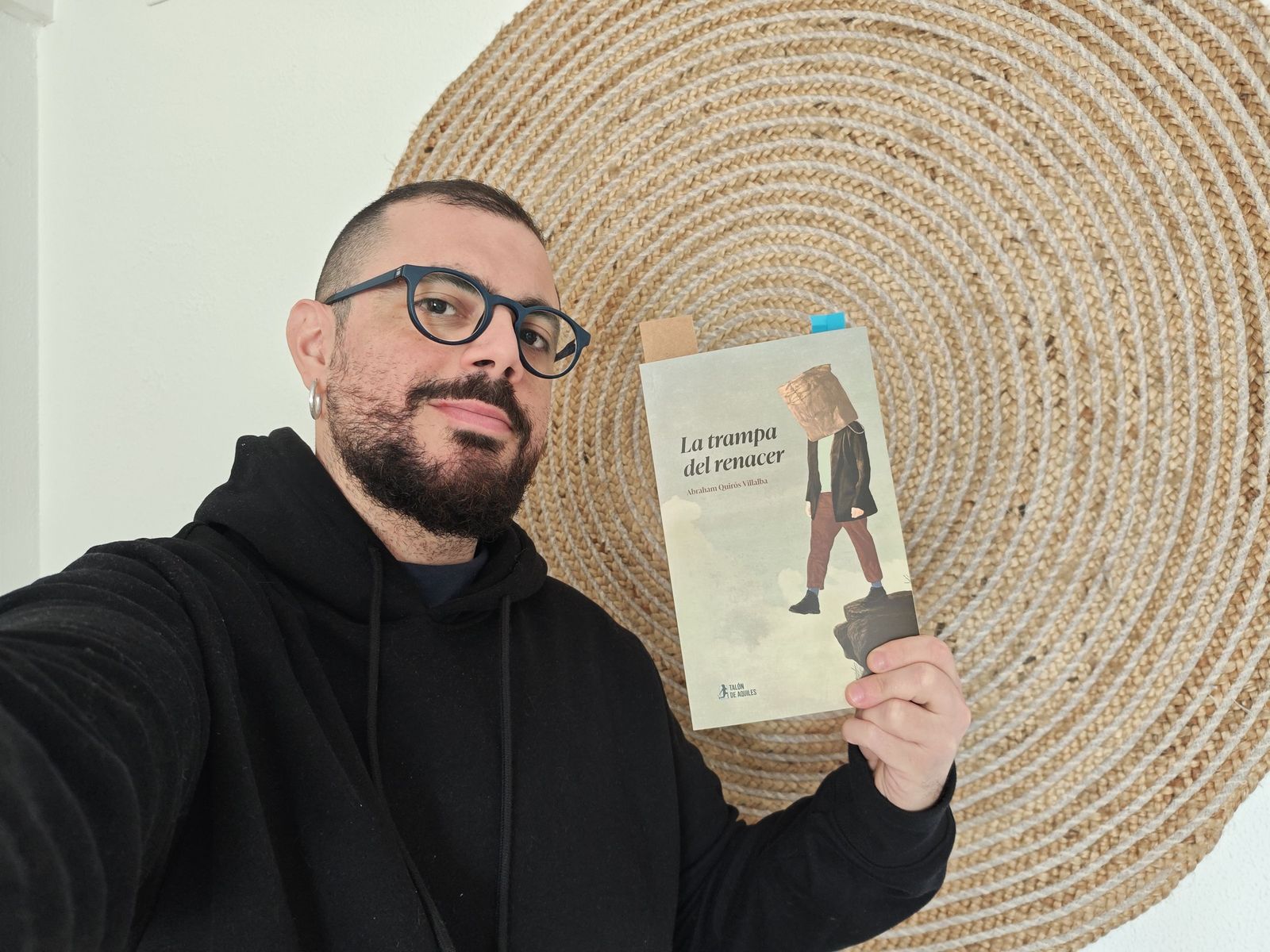
Ultimately the interest generated by Abraham Quiros Villalba says as much about the current information environment as it does about any single individual. Search engines surface pages optimised for attention. Content systems can generate plausible-sounding biographies at scale. Readers, pressed for time, often accept the first coherent story they encounter. The result is a thickening fog around relatively obscure names.
Clearing that fog is not glamorous, but it is useful. In this instance it reveals a Spanish editor doing steady, practical work on topics that affect people’s financial security and daily lives. It also reveals how readily alternative identities can be constructed and amplified. Both findings have value. The first points readers toward a genuine source of benefits information. The second serves as a standing reminder to check the foundations beneath any impressive-sounding online profile.
For those who encounter the name Abraham Quiros Villalba in future searches, the prudent path is straightforward: look for the bylines, the organisational affiliation and the volume of published work that can be examined. Treat unsupported narratives of oil empires, solar empires and AI platforms with the scepticism they currently warrant. In an internet crowded with confident assertions, the quiet record of consistent editorial output remains the more reliable guide.
Frequently Asked Questions
Who is Abraham Quiros Villalba according to verifiable sources?
He is a Spanish philologist and content editor at Tododisca who writes extensively on Social Security, disability benefits and related topics for Spanish-speaking audiences.
Is Abraham Quiros Villalba a major renewable-energy entrepreneur?
Publicly available independent records do not substantiate claims of large-scale oil-to-solar transitions or utility-scale projects under this name.
Why do so many conflicting biographies of Abraham Quiros Villalba exist online?
The name has been used in numerous low-verification content pages that recycle similar entrepreneurial or historical narratives, creating an impression of multiple identities.
Does Abraham Quiros Villalba work in cryptocurrency or AI?
There is no clear public evidence linking the documented editor to major verified crypto projects, token launches or AI platforms.
Where can readers find articles by Abraham Quiros Villalba?
His byline appears on Tododisca covering practical guidance on benefits systems, with hundreds of pieces catalogued on platforms such as Muck Rack.
Should British readers treat investment claims associated with the name cautiously?
Yes. Unsupported stories of exceptional investment success should be approached with the same due diligence applied to any unverified financial narrative.



[…] Abraham Quiros Villalba: Unpacking the Spanish Editor Behind the Online Maze […]