

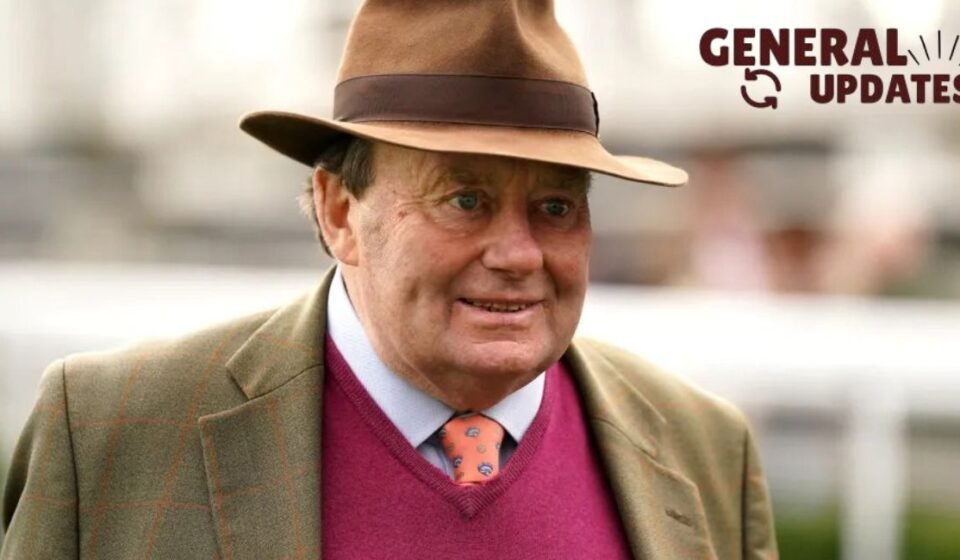

Nicky Henderson net worth remains a topic of quiet fascination among racing enthusiasts across the United Kingdom. As one of the most successful National Hunt trainers of the modern era, the man from Seven Barrows in Lambourn has spent nearly five decades at the sharp end of British jump racing. His name is synonymous with Cheltenham Festival glory, Champion Hurdles and Gold Cups. Yet for all the silverware and headlines, precise figures surrounding the Nicky Henderson net worth are harder to pin down than a reliable outsider in the Supreme Novices’ Hurdle.
Public estimates most commonly settle around the £8 million mark, a figure that has circulated in British media for several years and still appears the most credible ballpark. Some online sources push the number higher, others lower, but the consensus among those who follow the sport closely is that the Nicky Henderson net worth reflects a long, carefully managed career rather than sudden windfalls or flashy commercial empire-building. In an industry where prize money is shared, training fees are competitive and overheads are punishing, simply remaining at the top for so long is itself a financial achievement.
Nicky Henderson net worth is estimated at approximately £8 million. The bulk of his fortune comes from decades of training fees and prize money earned at the highest level of British jump racing.
Early Life and the Path Into Racing
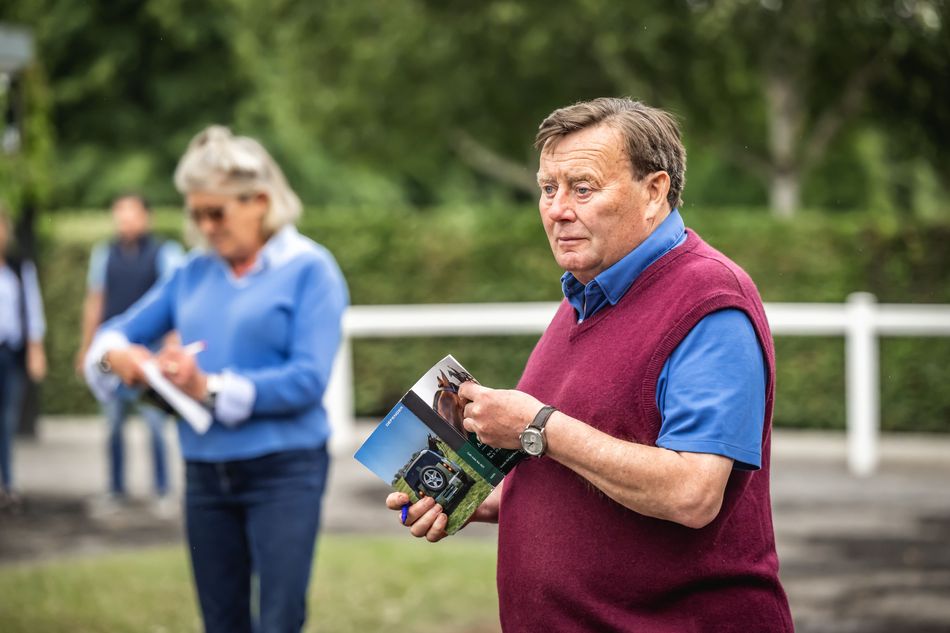
Nicholas John Henderson was born on 10 December 1950. His father, Johnny Henderson, was a significant figure in British racing administration and one of the founders of what became Jockey Club Racecourses. The family connection offered an early introduction to the sport, yet it was never a guaranteed golden ticket. After Eton, Nicky spent time working on a livestock farm in Australia before returning to Britain and taking a job as assistant to the legendary Fred Winter.
That apprenticeship proved decisive. Winter’s yard was a finishing school for future trainers, and by 1978 Henderson was ready to take out his own licence. His first winner came that autumn with Dukery at Uttoxeter. The early years were modest. He began with a small string at Windsor House in Lambourn and gradually built a reputation for patience with tricky or fragile horses. The first major breakthrough arrived in the mid-1980s when See You Then landed three consecutive Champion Hurdles. Those victories helped secure the first of six Champion Trainer titles and established Henderson as a serious force.
Seven Barrows and the Making of a Modern Powerhouse
The move to Seven Barrows in 1992 marked a turning point. The historic yard, high on the Downs above Lambourn, gave Henderson the space and facilities to expand. Over the following decades the stable became one of the most recognisable addresses in British racing. At its peak it has housed well over 150 horses, many of them owned by high-profile clients who value the combination of meticulous preparation and understated professionalism that Henderson has always projected.
Training fees form the backbone of any top yard’s income. Owners pay substantial monthly sums for the care, feed, veterinary attention and daily work of their horses. On top of that comes the prize money. In strong seasons Henderson’s string has generated several million pounds in prize money, a portion of which returns to the trainer under the standard percentage arrangements. In 2017/18 the yard recorded more than £3.4 million in prize money alone, one of its strongest campaigns in pure financial terms. Those numbers fluctuate with the quality of the horses and the vagaries of the racing calendar, yet the cumulative effect over forty-plus years is considerable.
The Nicky Henderson net worth has therefore been built primarily on two pillars: consistent training fees from a large and well-heeled client base, and a share of the prize money accumulated across thousands of runners. Endorsements and commercial deals exist but have never been the dominant feature of his public profile. Henderson has never been a particularly flamboyant self-promoter. The focus has remained on the horses and the yard.
Cheltenham, Royalty and the Value of Longevity
No discussion of Henderson’s career is complete without Cheltenham. For many years he held the record as the most successful trainer at the Festival. Even after Willie Mullins overtook him, Henderson remains comfortably second with more than seventy winners. The list includes a record nine Champion Hurdles, six Queen Mother Champion Chases and two Cheltenham Gold Cups (Long Run in 2011 and Bobs Worth in 2013). Horses such as Sprinter Sacre, Altior, Buveur d’Air, Epatante and Constitution Hill have carried the Seven Barrows colours into the winner’s enclosure on the biggest stage of all.
Royal connections have added another layer of prestige. Henderson trained for Queen Elizabeth The Queen Mother and later for Queen Elizabeth II, producing more than sixty winners for the royal family. He continues to train for King Charles and Queen Camilla. Those associations do not necessarily translate into direct financial windfalls, but they reinforce the reputation that attracts the best owners and the best horses. In an industry where reputation is currency, such continuity has tangible value.
The sheer length of the career matters. Many trainers enjoy a purple patch and then fade. Henderson has remained competitive across five decades. That consistency reduces the risk of boom-and-bust that can afflict racing yards when a star horse retires or an owner withdraws support. The Nicky Henderson net worth reflects that long-term stability as much as any single spectacular season.
How the Money Actually Works in National Hunt Racing
Outsiders sometimes assume that every big race win pours millions straight into a trainer’s pocket. The reality is more nuanced. Prize money is split according to fixed percentages among owner, trainer, jockey, stable staff and others. Training fees must cover the substantial costs of running a large yard: staff wages, feed, bedding, farriery, veterinary bills, transport and the maintenance of gallops and facilities. Lambourn property and land values have risen over the years, adding both asset value and ongoing expense.
Henderson has never been known as a prolific owner of horses in his own right. He has spoken openly about the risks of ownership and the preference for concentrating on the training side. That approach limits potential upside from breeding or bloodstock sales but also reduces exposure to the sharp downside that can accompany breeding ventures. The result is a more predictable, if less explosive, financial profile.
Company filings for the training operation have at times shown more modest net assets than the headline personal estimates. This is not unusual. A trainer’s personal wealth can include property, investments and accumulated earnings that sit outside the limited company structure. The £8 million figure most often quoted for the Nicky Henderson net worth appears to capture that broader picture rather than a single company balance sheet.
Lifestyle, Privacy and Public Perception

For a man who has spent a lifetime in the public eye of British racing, Henderson has managed to keep a relatively low personal profile. He is not a fixture on the celebrity circuit. Interviews tend to focus on the horses rather than the trainer’s private life. He was previously married and has children, but details remain private, which is entirely in keeping with the traditional culture of the jumping game.
Living and working in the Lambourn Valley places him at the heart of Britain’s National Hunt community. The area is dense with trainers, jockeys, owners and support staff. Success is measured in winners and the respect of peers more than in glossy magazine features about personal wealth. In that context the Nicky Henderson net worth is interesting mainly as evidence that excellence over a long period still produces a comfortable result.
Also read: Katie Hopkins Net Worth: The Full Picture of Her Fortune, Career and Controversies
Comparisons Within the Sport
Placing the figure in context helps. Top Flat trainers with access to the richest international owners and the Arab market can generate higher annual turnovers. On the jumping side, the most successful Irish yards operate on a different scale again, often with deeper ownership syndicates and stronger prize money streams from the Irish calendar. Within the British National Hunt ranks, however, Henderson sits near the top of the earnings table for sustained achievement. Paul Nicholls has enjoyed comparable success and a similar financial trajectory. The two men have battled for the trainers’ championship across multiple seasons, and both have converted that rivalry into lasting professional standing.
What sets Henderson apart is the combination of classical British training methods with an ability to adapt. He has embraced modern veterinary science, improved gallops and careful management of fragile stars such as Constitution Hill without losing the traditional values that owners still prize.
Looking Ahead
At an age when many professionals have long since retired, Henderson continues to operate at the highest level. Constitution Hill remains one of the most exciting horses in training when sound. New prospects continue to arrive at Seven Barrows. The yard’s reputation ensures that the best owners still send him talented young stock. Provided health allows, there is no obvious reason why the operation should not continue generating substantial income for years yet.
Any future increase in the Nicky Henderson net worth will depend less on a sudden commercial breakthrough and more on the same factors that have served him so far: keeping the horses sound, winning the right races, and maintaining the trust of owners who are prepared to pay top rates for the privilege of having their colours carried by a Seven Barrows runner.
The Broader Lessons of a Racing Career
Henderson’s story illustrates something important about British jump racing. It is still possible to build a substantial livelihood through skill, patience and longevity rather than through aggressive commercialisation or media celebrity. The Nicky Henderson net worth is the product of thousands of early mornings on the gallops, careful decisions about which horses to keep and which to move on, and an ability to handle both the brilliant and the difficult animals that owners send him.
For younger trainers coming through the ranks, the example is instructive. The path is long, the margins can be tight, and success is never guaranteed. Yet for those who combine talent with resilience, the rewards remain real. Eight million pounds may not place Henderson among the ultra-wealthy of modern sport, but in the context of National Hunt racing it represents a life well spent at the top of a demanding profession.
Frequently Asked Questions
What is the most commonly accepted figure for Nicky Henderson net worth?
Most British sources place the Nicky Henderson net worth at approximately £8 million.
How does Nicky Henderson primarily earn his money?
The bulk of income comes from training fees charged to owners and a percentage of the prize money won by horses in his care.
Has Nicky Henderson ever been Champion Trainer?
Yes, he has been British jump racing Champion Trainer on six occasions.
Where is Nicky Henderson’s training yard based?
He has been based at Seven Barrows in Lambourn, Berkshire, since 1992.
How many Cheltenham Gold Cups has Nicky Henderson won?
He has trained the winner of the Cheltenham Gold Cup twice, with Long Run in 2011 and Bobs Worth in 2013.
Does Nicky Henderson still train for the Royal Family?
Yes, he continues to train horses for King Charles and Queen Camilla and previously trained extensively for Queen Elizabeth II.


[…] Nicky Henderson Net Worth: How Britain’s Champion Jump Trainer Built His Fortune […]